Blog
Solar Borehole Pumps in Kenya: Prices, Selection & Installation

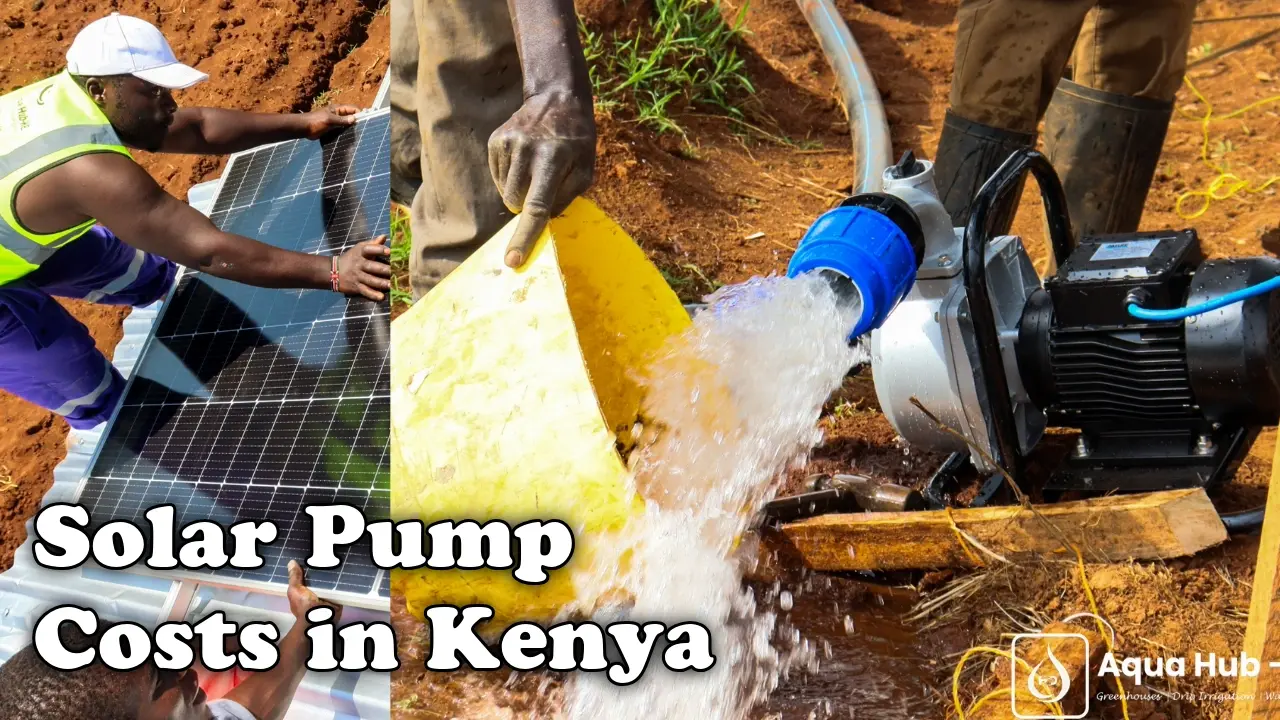
Reliable access to clean water is a growing challenge in Kenya especially in remote, arid and urban areas. As electricity costs rise not to mention outages, solar borehole pumps remain the dependable water pumping solutions.
This guide breaks down solar borehole pump prices in Kenya, accessories and the reliable installation partner to consult.
Call 0790719020
Recommended Solar Borehole Pumps in Kenya
Solar Borehole Water Pumps from Aqua Hub LTD are popular for their top performance and durability. Aqua Hub Kenya offers top borehole services, including pump installation, lifting, lowering, or maintenance.
Solar Borehole Water Pump Prices in Kenya
| Pump Capacity / Depth | Estimated Price (KES) | Common Application |
| Shallow Well (up to 30m) | KES 25,000 – 45,000 | Small domestic/Livestock |
| Mid-Range (60m – 100m) | KES 65,000 – 120,000 | Large homes / Small farms |
| Deep Well (150m – 250m) | KES 180,000 – 350,000+ | Commercial irrigation |
How Solar Borehole Pumps Work
Solar panels capture sunlight and convert it into DC electricity. This power is regulated through a controller, which runs the pump motor. As long as there is sunlight, the system pumps water continuously into storage tanks or directly to points of use.
Solar DC vs AC Borehole Pumps
- DC solar pumps run directly from solar panels and are more efficient for off-grid use.
- AC solar pumps require an inverter and are often used where grid or generator backup is available.
For most rural Kenyan applications, DC solar borehole pumps are the preferred option.
Why Choose Solar Borehole Pumps in Kenya?
Solar pumping technology aligns perfectly with Kenya’s climate and energy challenges.
Off-Grid Water Access
Many areas lack reliable electricity. Solar borehole pumps provide water even in remote villages, ranches, and farms without grid connections.
Cost Savings Over Time
Although the initial setup cost is higher, solar systems eliminate monthly electricity bills. Over 3–5 years, most users recover their investment.
Reliability in Remote Areas
With fewer moving parts and no fuel dependency, solar borehole pumps offer dependable long-term water supply.
Components of a Solar Borehole Pump System
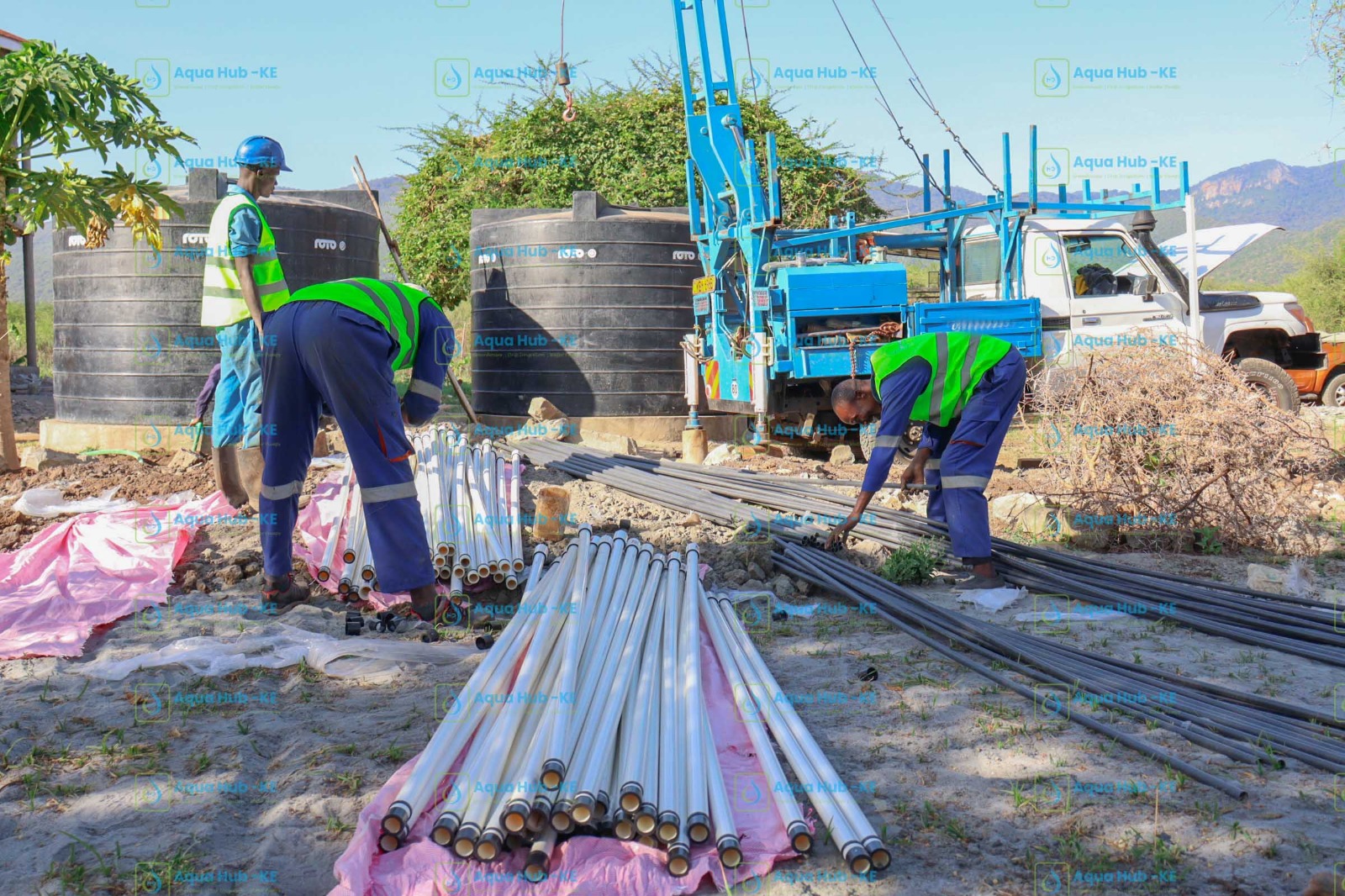
Accessories for installation of solar borehole pumps
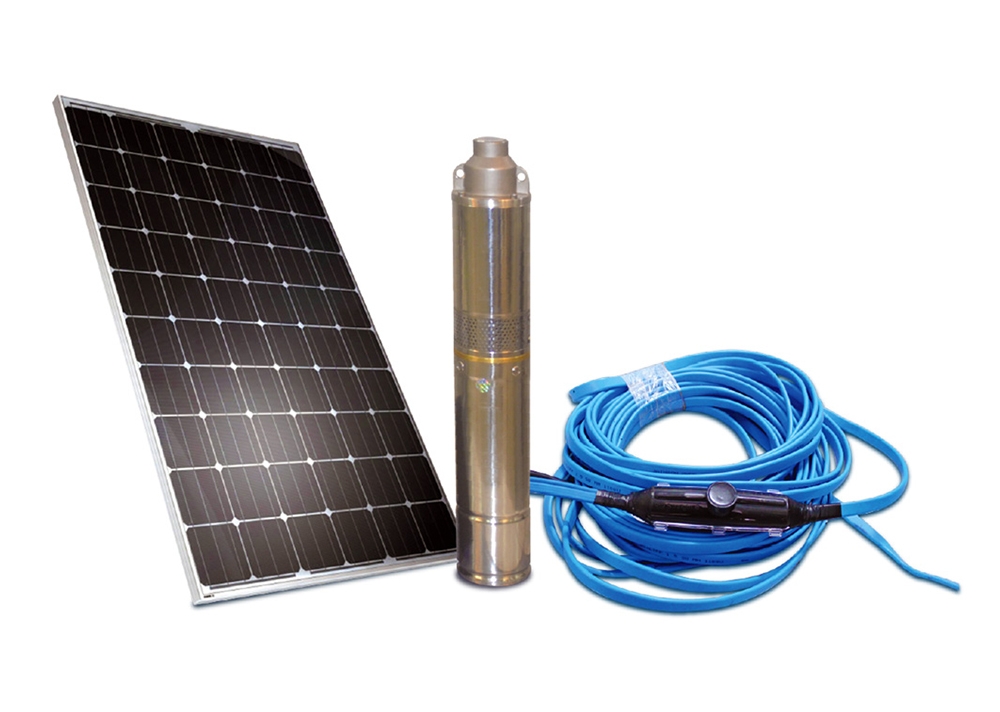
- Solar Borehole Pump: the right pump depends on the depth, water requirements and borehole diameter.
- Solar Panel: panels power the pump. Proper panel sizing is essential to ensure a consistent water supply.
- Sunverter: for AC pumps only. Converts direct current (solar power) to alternating current.
- Controller: protect the pump from dry runs and voltage fluctuations.
- Submersible cable: high-quality, 3- or 4-core cable for transporting current to the pump.
- Stainless steel rope: for lowering the pump.
- UPVC pipes: ideal for suction of water from the borehole.
- Borehole Cover: A steel plate to seal the well from contamination.
- Water Level Sensors: monitors water level in the borehole.
Types of Borehole Pumps
Submersible Solar Borehole Pumps
Submersible pumps are installed underwater and can lift water from depths of 30–250 meters, making them suitable for most Kenyan boreholes.
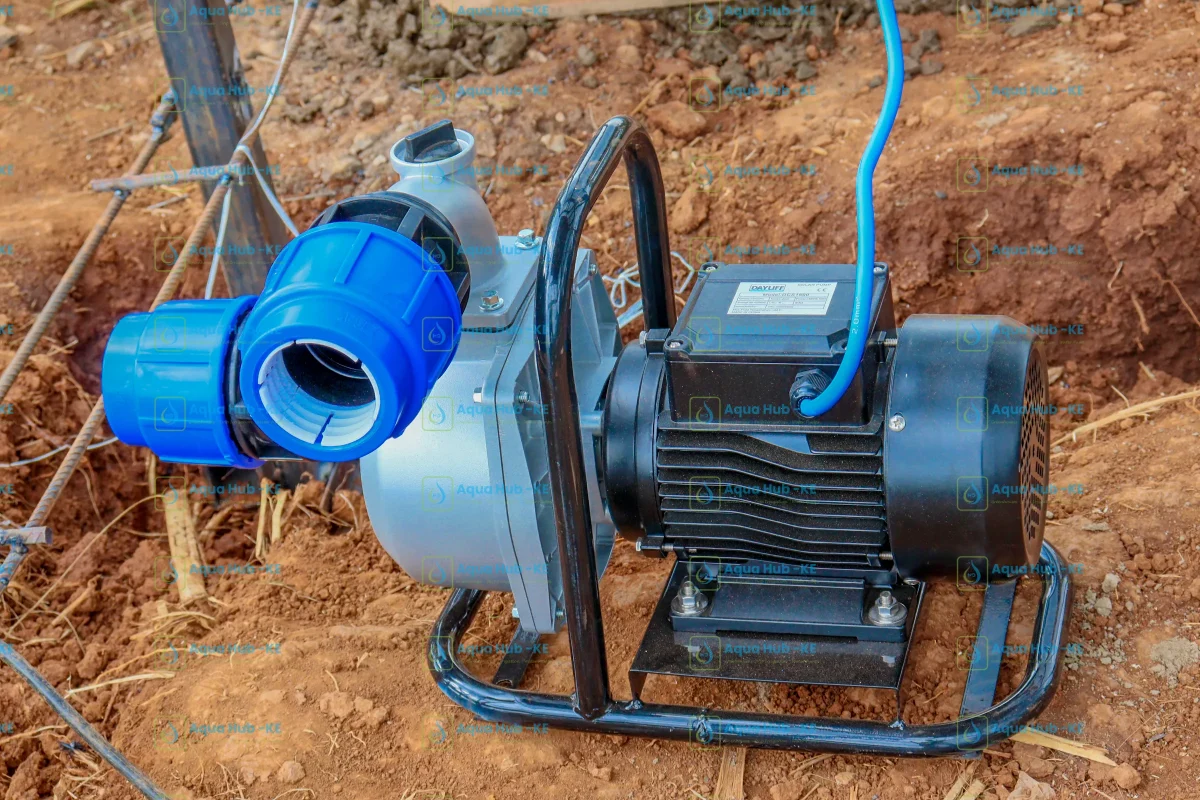
Surface Solar Pumps
Used for shallow wells or water transfer from storage tanks, but not ideal for deep boreholes.
Hybrid (Solar + Electric) Pumps
These allow switching between solar and grid or generator power, useful for institutions with high water demand.
Borehole Test Pumping: Why it is Essential
Before you buy solar panels, you must conduct a test pumping exercise. This is a 24-hour process where a temporary pump is used to determine how much water the borehole can sustainably provide.
The report will give you the static water level and the dynamic water level (where water drops to during pumping). People often forget that dynamic water levels change with seasons.
A Pump technician will pump test results to size your solar water pump so it operates at 60-70% of the borehole’s capacity, ensuring you never pump the well dry.
How to Select the Right Solar Borehole Pump
Daily Water Demand
Calculate daily water needs for household use, livestock, or irrigation.
Total Dynamic Head
Total head includes vertical lift, pipe friction, and tank height.
Borehole Yield
If you install a pump that draws 5,000 l/h in a borehole that yields 2,000 l/h, you risk dry running the pump dry which lead to pump damage.
Borehole Pump Installation: Step-by-Step
Professional installation ensures safety and efficiency.
- Planning and Site Assessment: Installers inspect borehole data, water quality, and panel location.
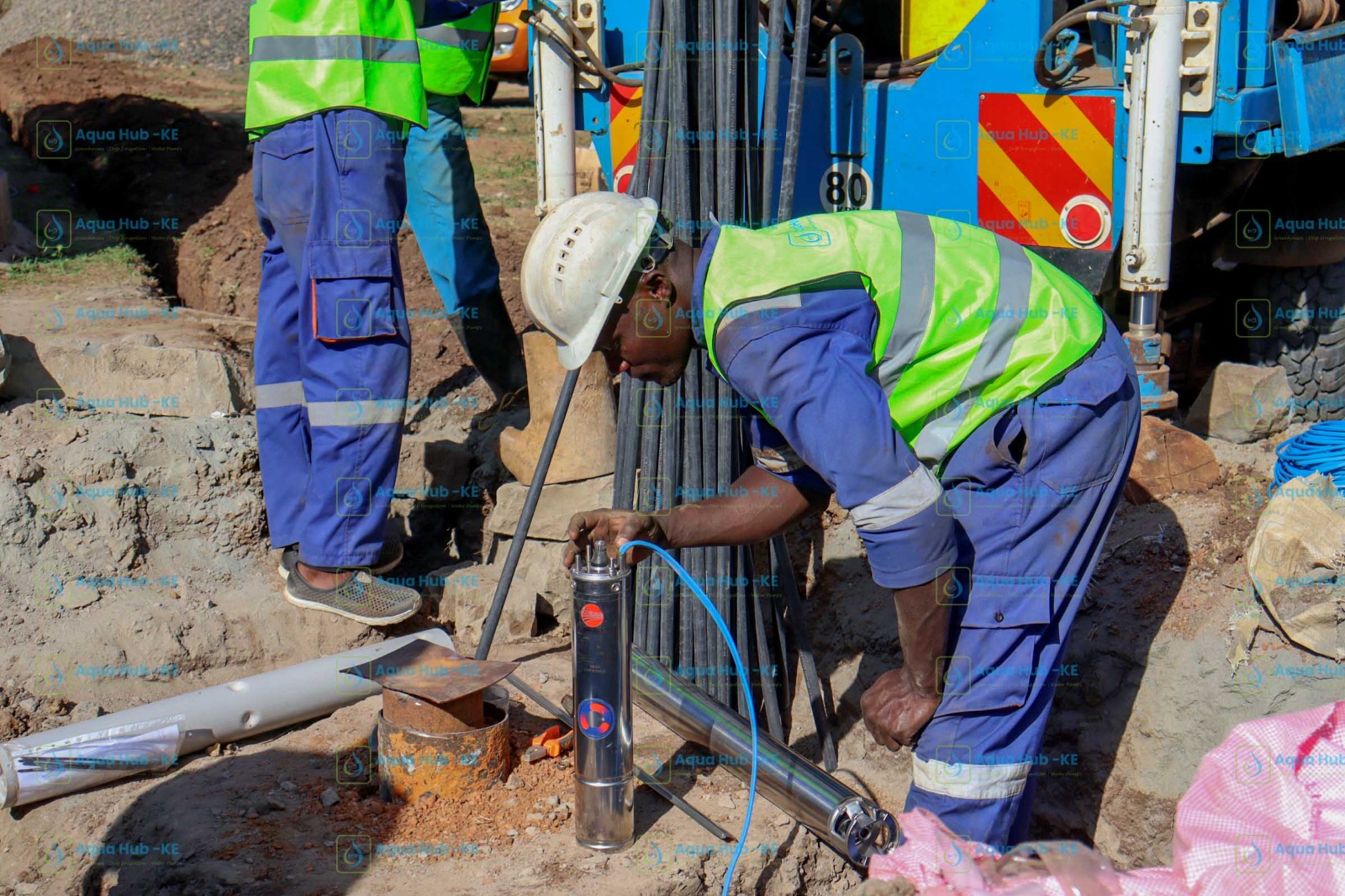
- Lowering and Aligning the Pump: carefully done using safety ropes and guide pipes to avoid cable damage.
- Electrical & Controller Setup: Controllers are mounted in weather-protected structures, and panels placed where maximum sun exposure.
- Testing and Commissioning: Flow rate, voltage, and pressure are tested before full operation begins.
Borehole Pump Lifting and Lowering Practices
Proper handling prevents costly damage.
Safety Tips
Always switch off power before lifting
Use safety ropes and clamps
Avoid sharp bends in pipes and cables
Lifting equipment: Tripods, chain blocks, or winches are recommended for deep boreholes.
Common Mistakes to Avoid
Dragging cables or allowing pipes to twist can damage the pump permanently.
Borehole Pump Accessories You Should Consider
Float Switches and Sensors
These prevent dry running and tank overflow.
Pressure Tanks
Useful for household systems requiring consistent pressure.
Control Panels & Fuses
Protect the pump from electrical surges and overloads.
Check Valves & Protection Devices
Prevent backflow and water hammer effects.
Maintenance Tips for Solar Borehole Pumps
Solar systems require minimal but regular maintenance.
Seasonal Checks
Inspect panel wiring, mounts, and pump output at least twice a year.
Cleaning Filters and Panels
Dusty panels reduce efficiency clean them every 1–2 months.
Troubleshooting Low Flow
Common causes include falling water levels, blocked pipes, or controller faults.
Solar vs Electric Borehole Pumps
Choosing between solar and electric depends on location and usage.
Cost Comparison
Solar has higher upfront costs but lower lifetime expenses.
Lifespan & Reliability
Solar pumps experience less wear due to smoother operation.
Optimal Use Cases
- Solar: remote, off-grid, high sunshine areas
- Electric: urban settings with reliable power
Frequently Asked Questions
1. How long do solar borehole pumps last?
With proper maintenance, most systems last 8–15 years.
2. What is the cost of installing a solar borehole pump in Kenya?
Installation typically costs KES 20,000 – 100,000, depending on depth and complexity.
3. Can solar borehole pumps work on cloudy days?
Yes, but output is reduced. Oversized panels help maintain performance.
4. How deep can a solar borehole pump lift water?
Over 250 meters.
5. Are solar borehole pumps suitable for irrigation?
Yes, especially for drip and sprinkler irrigation with storage tanks.
6. Do I need batteries for a solar borehole pump?
Most systems pump directly during the day without batteries.
7. What accessories are essential for a solar borehole pump system?
Controllers, float switches, safety ropes, and check valves are highly recommended.
8. How often should solar panels be cleaned?
At least once every 1–2 months, especially in dusty areas.
9. Can I convert an electric borehole pump to solar?
Yes, but pump compatibility and power requirements must be assessed.
10. Where can I buy solar borehole pumps in Kenya?
Aqua Hub Kenya.