


Blog
Borehole Solarization in Kenya: Best Solar Pumps

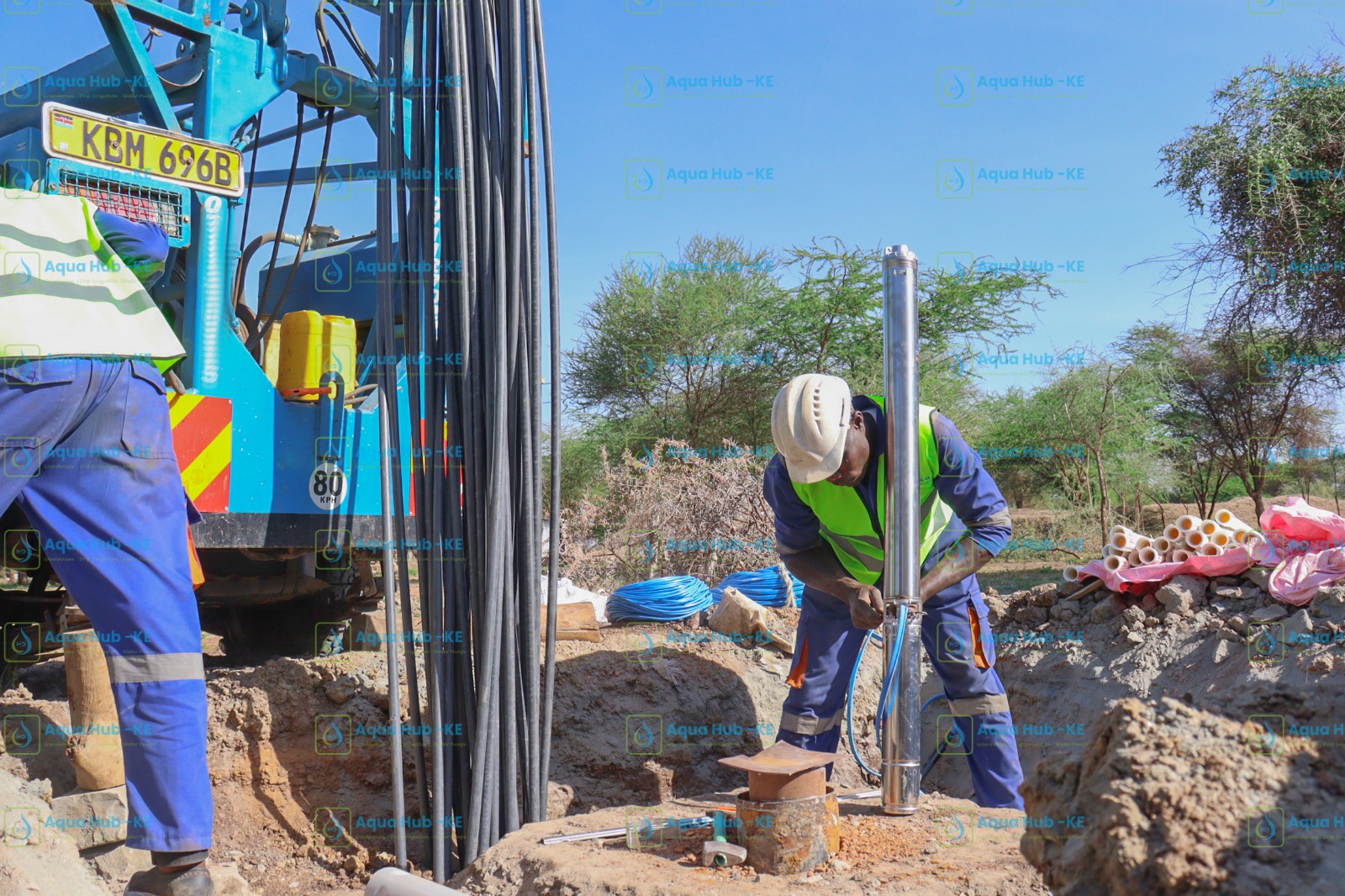
Borehole solarization makes it sustainable and cost-effective to access water. At Aqua Hub Kenya, we specialise in borehole solarization by sizing and equipping with the right pump and complete accessories.
Take advantage of the sun to enhance constant water access by equipping your borehole with our solar pumping system.
Call 0790719020
Cost of Borehole Solarization in Kenya
The cost of borehole equipment and installation varies with pump size, panel capacity, controller or inverter type and battery needs. It ranges from KES 300,000 to or exceeding KES 1,000,000.
Call 0711138312 for borehole solarization.
Borehole Solarization in Kenya: How Does it Work?
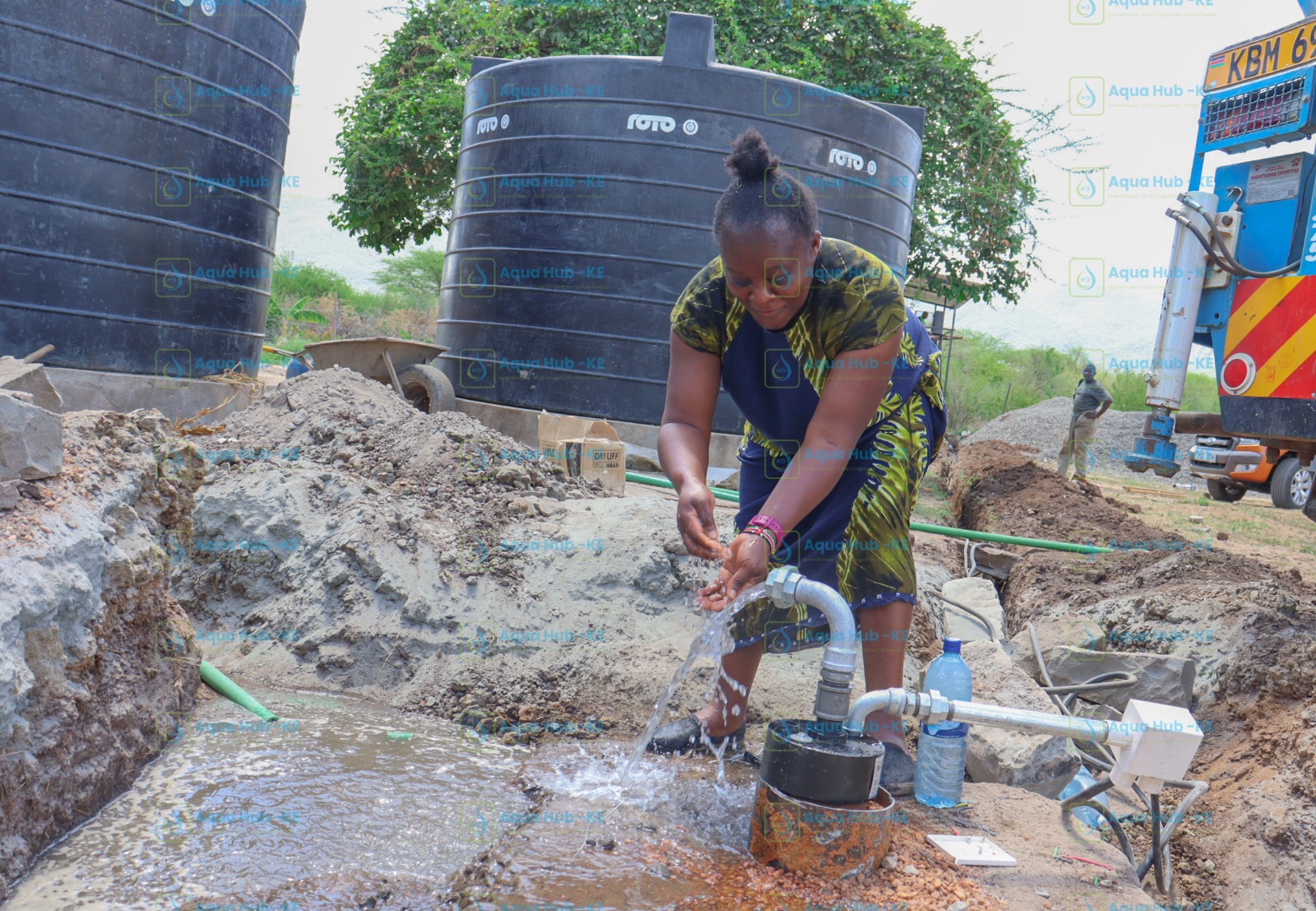
Client accessing water from the borehole after installation and commissioning
By equipping your borehole with a solar pumping system, we ensure your daily water requirements are met. By using solar power to draw water, solarization cuts down energy costs and improves the efficiency of clean supply.
Products Needed to Solarize a Borehole
- Water Pump: consider power requirements.
- Cooling Sleeve: optional, but always try to include.
- Cable Joint: acts as a splicing kit for joining the motor to the cable.
- Drop Cable: connects the motor to the power source (inverter)
- Well Probe Sensors: electrodes that prevent the pump from dry runs.
- Laundex Cable: connects to electrodes. Usually 1.5 mm.
- UG Cables: for the motor and electrodes. Use the drop cable sizing table to get the right size.
- Borehole UPVC drop pipe: preferred for borehole water supply. Choice depends on the pump type.
- PVC air lines: column pipes for boreholes. more durable and non-corrosive than steel pipes.
- Borehole Cover with adapter set: a strong steel metal plate of 1¼” to 4”. Pipe size and casing determine the cover size.
- Inverter – for AC pumps. For Dayliff, use two options:
- SVB for analog
- SV3 for Digital
- Float switch with cable – cable always 15 mm 2-core.
- PV disconnect switch – rated according to power requirements.
Importance of Borehole Solarization in Kenya
Cost Saving
Solarizing a borehole cuts operating costs by eliminating expensive electricity and diesel fuel bills.Esp for Irrigation projects
Energy Efficiency
Solar pumps use free energy from the sun and save a lot of money.
Reliable Water Access
Solar borehole systems secure water supplies for irrigation, animal and domestic use, and commercial needs. Counties like Kiambu and Baringo have shifted to solar to stabilize water delivery and reduce reliance on grid power.
Steps of Borehole Solarization in Kenya
Borehole Inspection
Before solarizing a borehole, inspection is essential to check for availability of water and structural integrity of the borehole.
Inspection includes evaluating borehole depth, static water levels, and geological conditions. This phase ensures the borehole can support the intended water demand.
Borehole Test Pumping
Test pumping involves measuring a borehole’s sustainable water yield for correct pump sizing to avoid low or over-extraction. Pump testing takes at least 24 hours.
Borehole Equipping & Pump Selection
Once borehole water yield is known, the borehole is equipped with a suitable submersible pump and pipes. You can use either Direct Current (DC) pumps or an electric (AC) pump with an inverter.
Solar Panel and Controller Installation
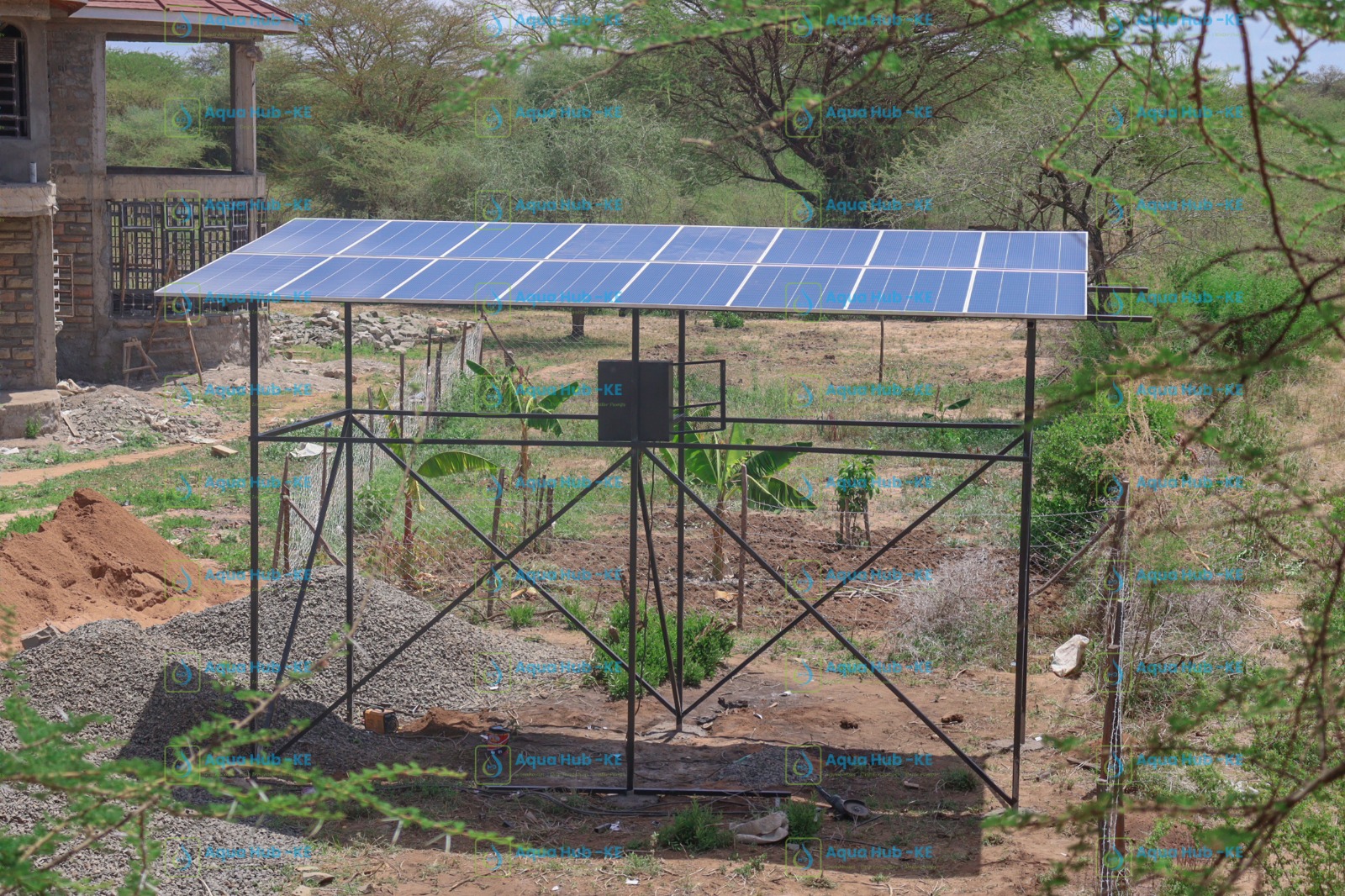
Solar panels Mounted near the borehole to power the pump
Monocrystalline Solar panels are installed on ground-mounted metal panes or roofs connected to controllers/inverters that regulate voltage and power the pump. Proper mounting and wire sizing ensure efficient power transfer.
Designing a Solar Borehole Pumping System
Solar Panel Sizing & Layout
To size solar panels correctly, you must consider the water needs, power capacity of the pump motor and sunlight hours.
Kenyan sunlight levels make solar an effective choice, but proper design ensures enough power even during cloudy seasons.
Pump Sizing & Power Requirements
Correct pump size depends on borehole depth, yield, and desired flow. The pump test report shows the power requirements of an ideal pump. Pumps range from small DC submersibles for homes to large three-phase systems for industrial use.
Battery Backup & Hybrid Options
While batteries increase costs, they offer water delivery even when solar availability is low, improving reliability. Hybrid systems that combine solar and grid or generator backup are common for high water needs in industrial areas.
Installation
Installation of solar borehole pumps is done by Aqua Hub LTD. Our technicians mount the solar panel, connect the controller and lower the pump.
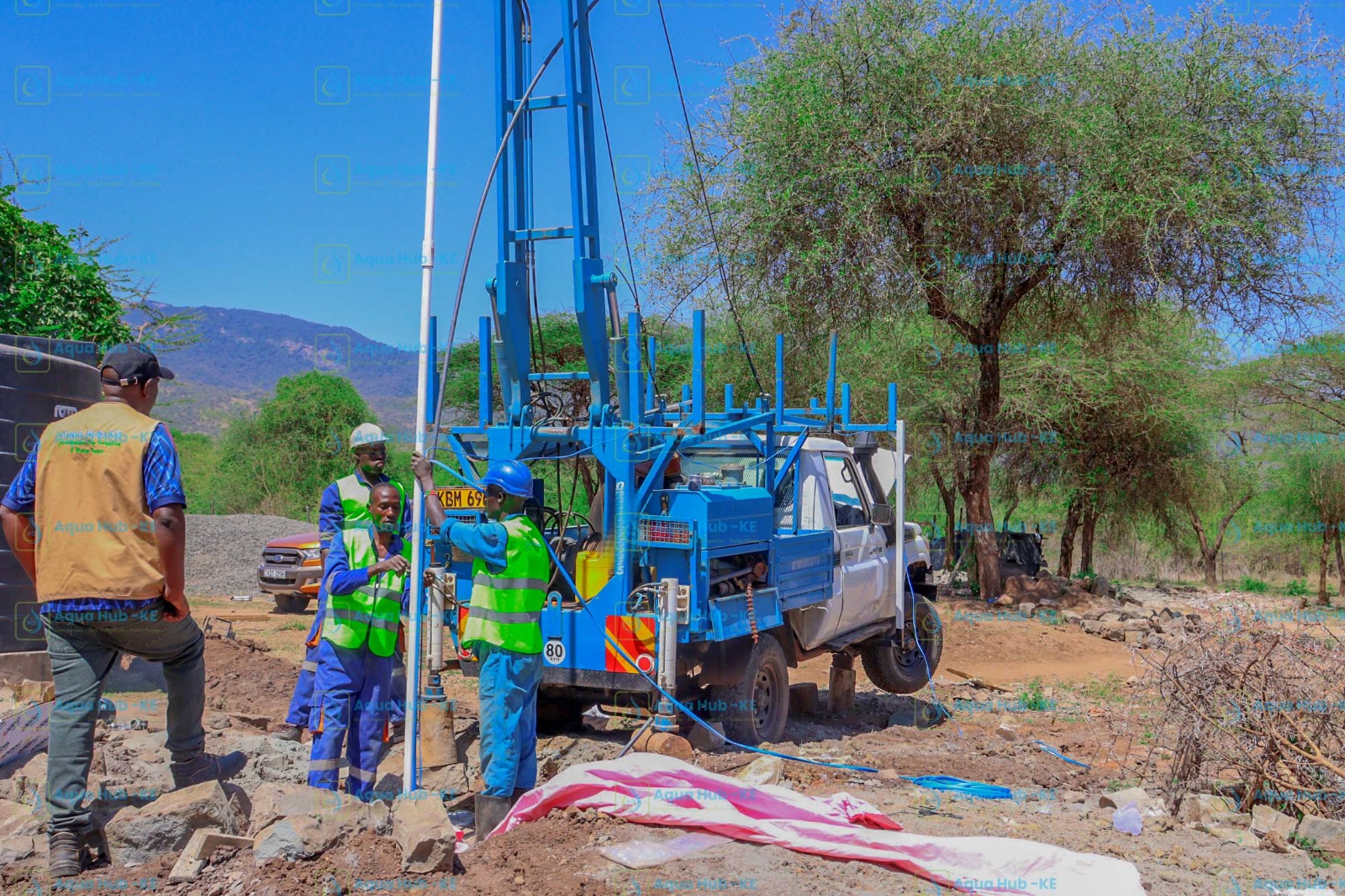
solar pump installation
Commissioning of the System
After installation, we test the system to ensure correct flow and optimal panel orientation.
Maintenance of Solar Borehole Pump System
Borehole solar pumps and accessories require minimal maintenance. However, frequent essential checks include:
- Cleaning solar panels to remove dust and debris regularly.
- Inspecting wiring, connectors, and mounting hardware.
- Monitoring pump performance and yield levels.
Community Borehole Solarization Projects
County governments and NGOs are increasingly adopting borehole solarization to improve water access. In Kajiado, solarized boreholes now provide reliable supplies and cut costs for public water utilities.
Such initiatives show how sustainable water systems can empower communities, save budgets, and support local agriculture.
Case study: Adoption and use of solar water pumps in Kenya: Learnings from the SEFFA project
Farmers to access solar irrigation systems through flexible payment plans, says PS
Frequently Asked Questions
1. What is borehole solarization?
Powering a borehole water pump system using solar power instead of electricity or fuel.
2. How do you inspect a borehole before solarization?
Check the depth, water levels, yield and structure of the borehole to ensure it suits a solar submersible pump.
3. Why is test pumping important?
It measures a borehole’s sustainable yield and determines the suitable pump to use.
4. How much does borehole Solarization cost in Kenya?
KES 300,000 to KES 1 million or excess for large projects.
5. Can solar borehole systems work during cloudy days?
Yes, but performance is low. Batteries help maintain pumping during low sunlight.
6. What maintenance does a solar borehole system need?
- Regular panel cleaning
- Checking electric wiring
- Monitoring the pump performance
7. Do I need a permit for a solar borehole in Kenya?
Yes. You need approval from the Water Resources Authority (WRA).
8. How long do solar panels last?
At least 20 years.
9. Can industrial facilities use solar borehole pumps?
Yes. A well-sized borehole solar pumping system can meet large water demand for industrial use.