


Blog
Solar Pump Prices in Kenya: Complete Buyer’s Guide

Solar-powered irrigation is becoming a popular trend in farming because it is economical and highly dependable for crop production. According to the Ministry of Agriculture, solar water pumps have reduced the cost of irrigation by 70 per cent compared to fuel engine pumps. Solar water pump prices in Kenya are between KES 15,000 and KES 85,000.
This guide shows solar water pump prices in Kenya, how to buy the right pump and what you should know before investing.
Solar Pumps for Sustainable Irrigation in Kenya
Solar water pumps are a clean, cost-effective solution for irrigation and domestic and industrial water supply.
Aqua Hub LTD is a lead distributor of solar water pumps for irrigation in Kenya. We have a number of solar pumping solutions for home, irrigation, and community water needs.
Call 0711138312
Solar Pump Prices in Kenya
| Pump Type | Typical Price (KES) |
| Small DC Surface Pump | 35,000 – 70,000 |
| Solar Submersible Pump | 85,000 – 180,000 |
| Solar Borehole Pump | 180,000–450,000 |
| Complete Irrigation Kit | 250,000–800,000 |
Solar Pump Prices in Kenya: Types of Solar Pumps
Surface Solar Pumps
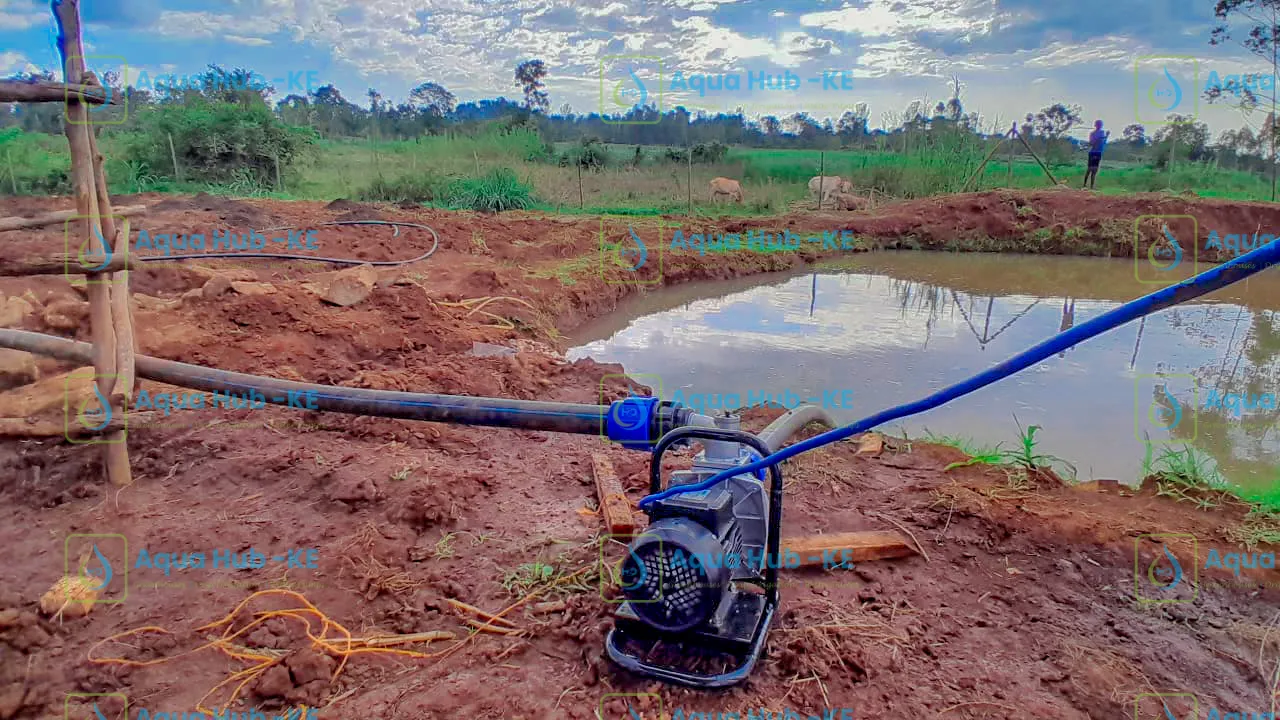
Solar Surface Pump for irrigation
Solar pump models are designed to move water while mounted on the ground surface. They are used when supplying water from rivers, ponds, dams, and shallow wells 8 m and below. Surface solar pump prices in Kenya are between KES 30,000 to KES 150,000.
Submersible Solar Pumps
High-performance solar pumps with a narrow design that pump water while installed inside the water source. Submersible solar pumps are ideal for deep boreholes and wells of 250 m or more. Submersible Solar Pump Prices in Kenya start from KES 17,000 to KES 230,000.
Types of Solar Pumps by Motor
DC Solar Pump
Solar pumps that work on direct current from the solar panel. The motor is built to use high DC current thus safe to power the pump without need for conversion to AC.
AC Solar Pumps
AC pumps are designed to use AC power. The configuration requires an inverter to convert direct current from the solar panel to AC current, which is safe for the pump to operate.
Solar Pump Prices in Kenya & Complete System
A complete solar pump system comes with:
- Solar panels – captures solar power.
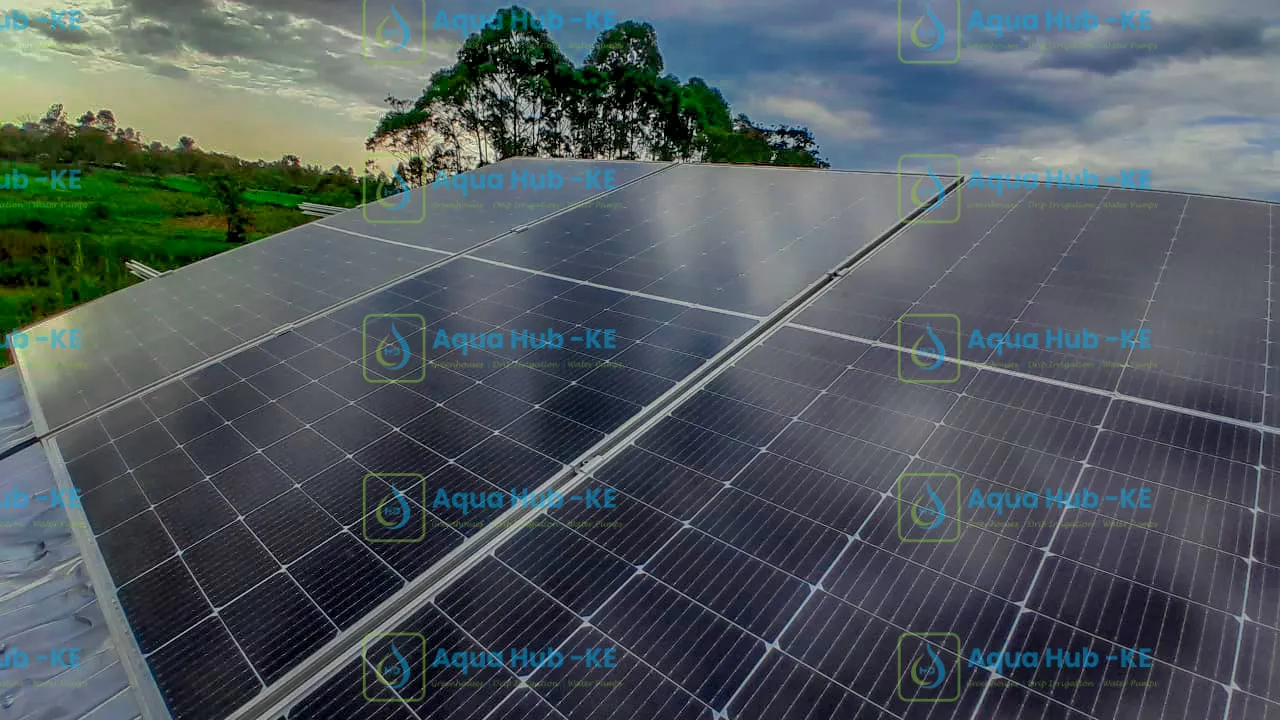
Photovoltaic Modules for powering on Surface Solar pumps
- Inverter – converts direct solar current to AC current for AC solar pumps.
- Electric cable – for transfer of solar power to the solar pump from inverter or solar panels
- MPPT controllers – tracks
Buying the Right Solar Pump for Irrigation: What Matters?
- Water Needs—First determine how much water you need for sufficient irrigation. The right water volumes will help us recommend you the right pump.
- Water Source Depth—accurate depth of the water source is essential so that the pump you buy will meet the suction limit.
- Farm size – important as well since it affects the choice of pump size. A large farm would often need more water; thus, a pump with a high flow rate and pump head to reduce the irrigation time.
- Borehole yield—the volume of water that your borehole or water source can produce will decide which pump you should choose.
Pump Sizing Formula (Simplified)
Daily Water Requirement ÷ Peak Sun Hours = Required Flow Rate
Kenya averages 5–6 peak sun hours/day.
Benefits of Solar Pumps
- Solar pumps provide a reliable and long service. The maintenance and operation cost is zero.
- Cost-effective perfperformance,it works completely on free solar energy.
- Solar pumps don’t release carbon or other toxic waste into the environment.
- Low breakdown or damages. The pump design has few moving partparts,s few chances of damage.
- High flow rates. Solar pumps have high flow rates and are useful in irrigation and high-water-needing applications.
Challenges of Solar Pumps and Possible Solutions
- Less Effective during Cloudy Days – use backup batteries to store power for the solar pump to run at night or during periods of low sunlight.
- High Upfront Investment Cost – expensive but worth it in the long run. Look for sustainable loans or grants if you cannot afford the higher cost to purchase the solar pump and complete system.
- Theft – most solar pump kits, including solar panels and inverters, installed in farms face risk of theft or damage. To prevent this, construct a structure to secure your inverter and install panels on a tower or secure your farm.
Maintenance of Solar Pumps
Solar pumps require minimal maintenance:
- Clean panels monthly
- Inspect cables quarterly
- Replace controller every 8–10 years
Solar vs Diesel Irrigation Pumps
|
Factors |
Solar Pumps |
Diesel Pumps |
|
Fuel Cost |
Free | Expensive |
|
Maintenance |
Low | High |
| Noise | Silent | Loud |
| Lifespan | Long | Short |
Common Mistakes to Avoid When Buying Solar Pumps
- Ignoring water source depth
- Buying without warranty
- Under-sizing panels
- Choosing price over quality
Frequently Asked Questions (FAQs)
1. What is the cost of solar pumps in Kenya?
Between KES 15,000 and 180,000, depending on system requirements.
2. Can solar pumps work on cloudy days?
Yes, but output reduces. Systems rely on average daily sunlight.
3. How deep can solar borehole pumps work?
200m to even 350m for some models
4. Are solar irrigation pumps worth it?
Absolutely. They offer long-term savings and energy independence.
5. Do solar pumps need batteries?
Most systems are direct-drive and do not require batteries.
6. How long do solar pumps last?
7–10 years for pumps and over 20 years for panels.
7. Which crops benefit most from solar irrigation?
High-value vegetables like onions, tomatoes, and peppers.
8. Can solar pumps be used in drip irrigation?
Yes, when paired with proper pressure regulators.
9. Is solar pump maintenance expensive?
No. Routine cleaning and inspections are sufficient.
10. Where can I buy reliable solar pumps in Kenya?
Aqua Hub LTD.