


Blog
Borehole Pump Lifting and Lowering Services in Kenya

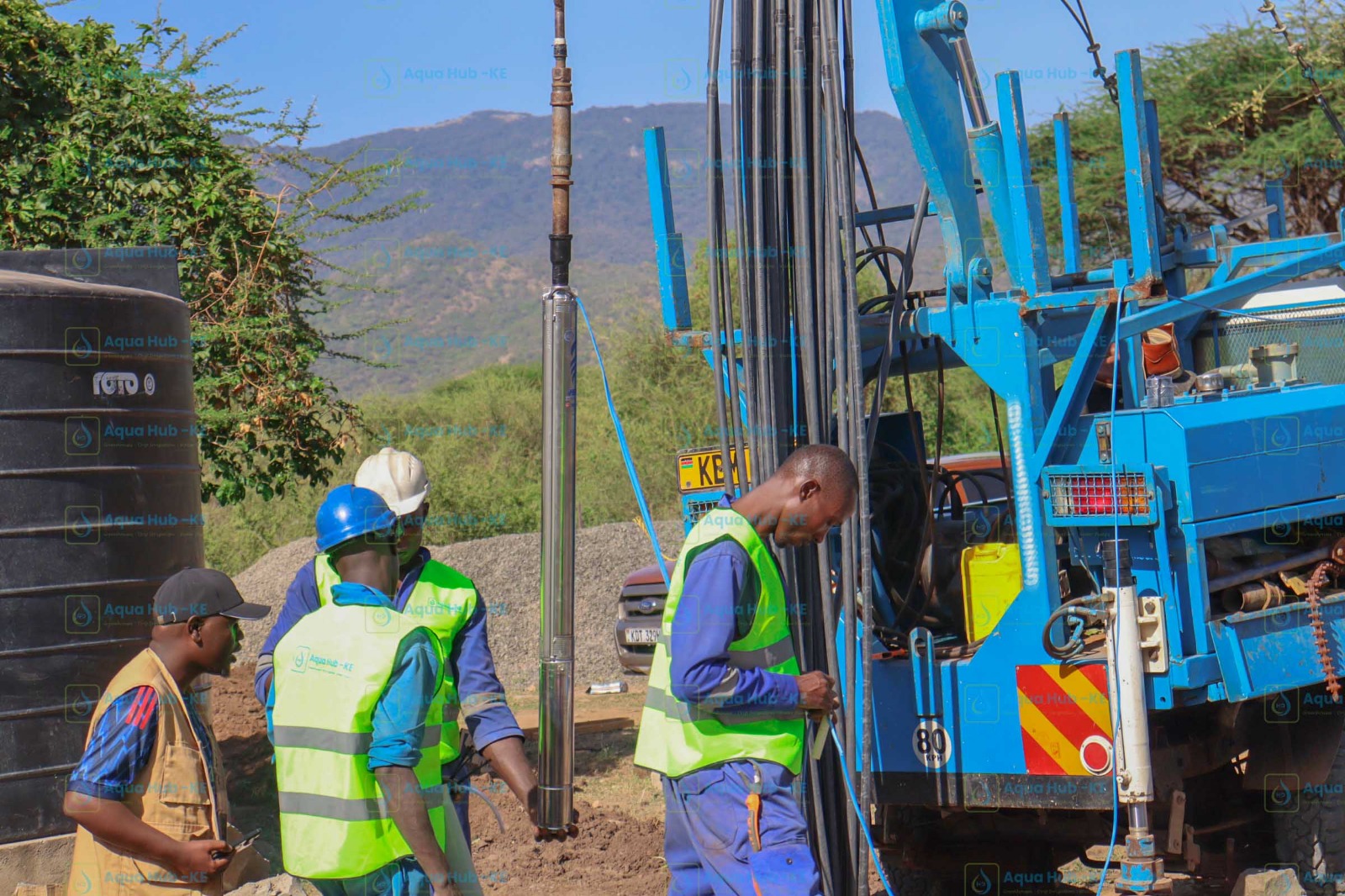
Managing a borehole in Kenya requires more than just drilling; it demands expert maintenance to ensure a steady supply of clean water. Aqua Hub Kenya provides top borehole pump lifting and lowering services for pump failure and maintenance needs in Kenya.
Call 0711138312
Borehole Pump Lifting and Lowering Services
Borehole pump lifting is done to retrieve a pump in case it fails, the water level drops, or you want to move it deeper. To lift a borehole pump, you need winches, A-frames, and heavy-duty lowering trucks.
Borehole pump lowering is essential for initial pump installation or after repair is done. When lowering, handle submersible cables, drop pipes, and safety ropes carefully to avoid the pump falling to the bottom.
When Do You Need Borehole Lifting and Lowering?
You might assume your pump is fine as long as water is coming out of the tap, but several red flags indicate it’s time for a lift-and-inspect service. If you notice a significant drop in water pressure or if the pump starts cycling on and off rapidly, there could be a mechanical blockage or a motor issue.
Cost of Borehole Pump Lowering Services in Kenya
The price of borehole pump lowering services in Kenya varies based on the depth of the well and the location. On average, labour for lifting or lowering a pump ranges from KES 15,000 to KES 45,000. However, this does not include the cost of replacement parts like motors, cables, or pipes.
| Service Component | Estimated Cost (KES) |
| Labor (Lifting/Lowering) | 15,000 – 45,000 |
| Pump Diagnostics | 5,000 – 10,000 |
| New Submersible Motor (0.75 kW – 2.2 kW) | 45,000 – 120,000 |
| Submersible Cable (per meter) | 350–800 |
For deep boreholes (over 200 m), expect to pay a premium due to the increased weight and risk involved.
Borehole Pump Lifting and Lowering Process
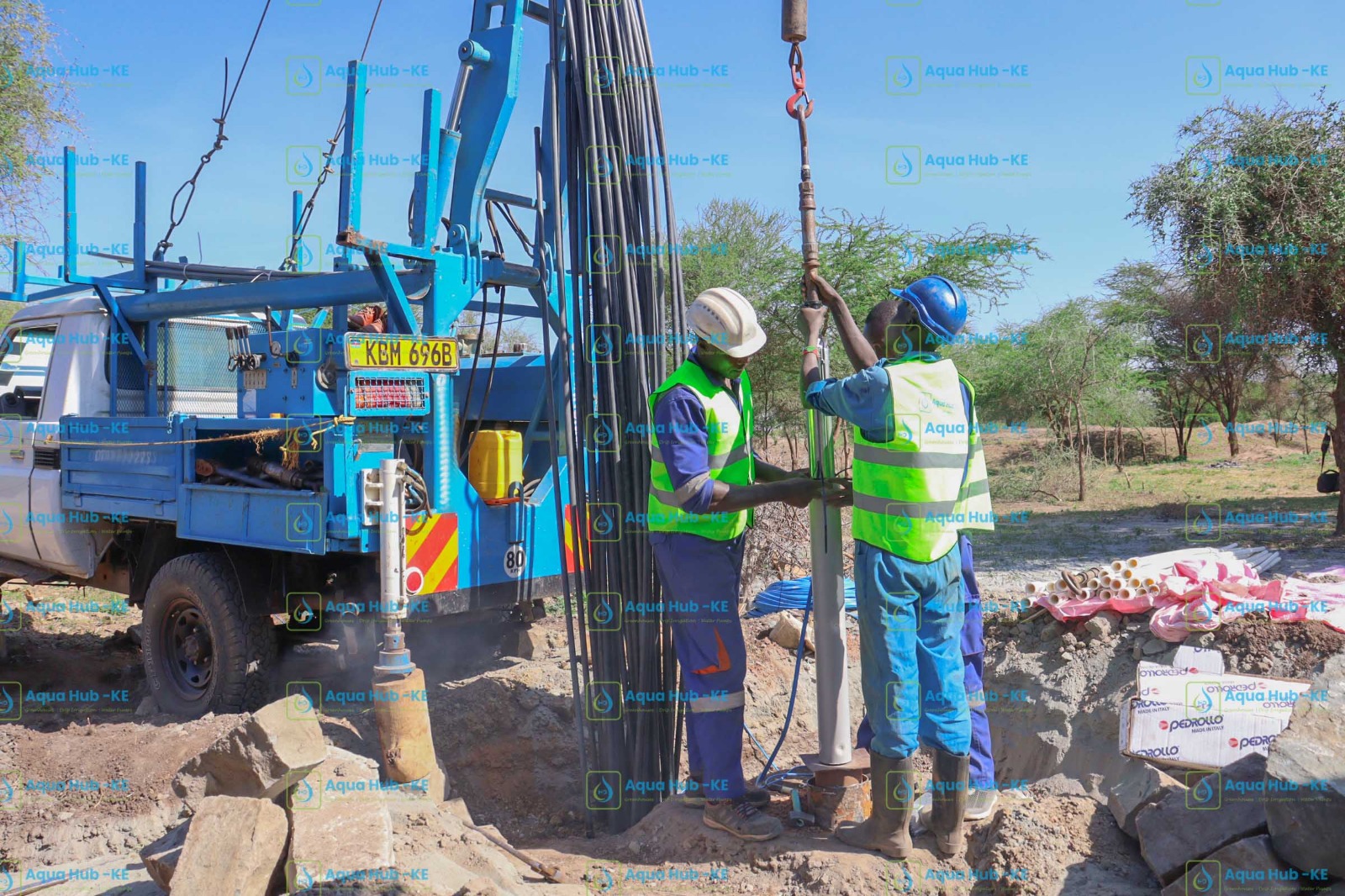
The process of borehole lifting and lowering is a delicate operation that begins with disconnecting the electrical supply and the surface plumbing. Technicians use a motorized winch to gradually pull the “rising main” (the pipe connecting the pump to the surface) out of the casing.
During retrieval, the team must carefully coil the submersible drop cable to avoid kinks or insulation tears. Once the pump is at the surface, a pump test is often conducted to see if the motor is still working. For borehole pump lowering services, the process is reversed, ensuring that every pipe joint is sealed with high-quality “plumber’s hemp” or Teflon tape to prevent leaks that reduce system efficiency.
How Borehole Pump Lifting and Lowering Works
Inspection and Pre-Lift Assessment
Technicians first assess borehole depth, casing diameter, pump weight, and water level. Some providers use borehole camera inspections to identify obstructions.
Controlled Lifting or Lowering
Using mechanical winches and guide clamps, the pump is slowly raised or lowered to avoid pipe snapping or cable damage.
Re-installation and Testing
After servicing or repositioning, the pump is reinstalled and test-pumped to confirm flow rate and pressure.
This systematic approach is standard among reputable Kenyan borehole service providers.
When Do You Need Borehole Pump Lowering Services?
Reduced Water Flow Rate
Mechanical wear, sand ingress, or electrical faults often require lifting the pump for repairs.
Reduced Water Levels
During dry seasons, pumps may need lowering to reach deeper water zones.
New Pump Installation
Switching to solar borehole pumps often requires full lifting and re-lowering.
Equipment Used for Borehole Lifting and Lowering Services
Winches, Hoists, and Tripods
These provide controlled lifting for deep boreholes exceeding 100 meters.
Safety Cables and Clamps
They prevent accidental pump drops, which is a common and costly mistake.
Borehole Cameras
Used to inspect casing conditions and confirm correct pump positioning.
Professional equipment significantly reduces long-term maintenance costs.
Using the wrong equipment, like a standard rope instead of a dedicated stainless steel borehole safety rope, can lead to the pump snapping off and becoming stuck, which requires expensive “fishing” services.
Common Challenges in Borehole Pump Lifting
Deep or Narrow Boreholes
Boreholes with narrow casings require extra care to avoid scraping or jamming.
Heavy Pumps and Corroded Pipes
Rusty pipes increase lifting difficulty and risk.
Borehole Pump Retrieval Services
What Is Borehole Fishing?
Borehole fishing involves retrieving dropped pumps, pipes, or cables from inside the borehole.
Why It is Important
A dropped pump can block the borehole entirely. Retrieval is often cheaper than drilling a new borehole.
Borehole Flushing, Cleaning, and Rehabilitation
After lifting a pump, technicians often recommend borehole flushing to remove sand, silt, or mineral buildup.
Benefits
- Improves water clarity
- Protects pump components
- Restores borehole yield
- Rehabilitation is especially useful for boreholes older than 5–10 years.
Test Pumping After Re-Installation
Test pumping after reinstalling your borehole pump is essential to confirm:
- Correct pump depth
- Sustainable yield
- Stable recovery rate
What Borehole Owners Should Look For
- Consistent flow rate
- Minimal sand production
- Stable water levels
This step ensures your investment delivers long-term value.
Solar and Electric Borehole Pump Integration
Solar Borehole Pump Systems
- After pump lowering, solar panels, controllers, and inverters are connected and calibrated.
Electric Pumps
- Require insulation checks and proper grounding to prevent failures.
- Many Kenyan households are shifting to solar due to rising electricity costs.
Safety Best Practices for Borehole Owners
During Service
- Keep children and livestock away
- Ensure power is disconnected
After Service
- Monitor water quality
- Check pressure consistency
Challenges in Borehole Lifting and Lowering Services
One of the biggest challenges in borehole lifting and lowering is the risk of the pump getting stuck due to borehole collapse or encrustation on the casing walls.
Safety is paramount. Technicians must use Personal Protective Equipment (PPE) and secure the wellhead and prevent tools from falling into the hole.
Furthermore, electrical safety is a major concern; ensure your contractor tests the “earthing” of the system. A poorly earthed pump can lead to “stray currents,” which accelerate the corrosion of the metal pipes, eventually leading to a pipe snap.
Choosing the Right Service Provider in Kenya
When sourcing borehole pump lowering services, check if the company is registered with the Water Resources Authority (WRA).
Ask the following questions:
- Do you have a motorized winch for deep lifting?
- Do you provide a warranty on the labor and any parts replaced?
- Can you provide a “test pumping” report after the installation?
A reputable provider will always conduct a “megger test” on the motor and cable before lowering it to ensure the electrical insulation is intact.
Frequently Asked Questions
1. How often should you conduct borehole pump lifting?
after 3–5 years, or when performance drops.
2. Can I lower a borehole pump myself?
Not recommended. Professional borehole pump lowering services prevent damage.
3. What causes pumps to get stuck?
Corrosion, narrow casings, or collapsed borehole walls.
4. Is borehole fishing always successful?
Success depends on depth and obstruction type, but it often works.
5. Does pump depth affect water yield?
Yes, incorrect depth reduces efficiency.
6. How often do water pumps need to be serviced?
7. How long does lifting and lowering take?
Typically, 1 day for private boreholes.
8. Will lifting affect water quality?
Temporary disturbance is normal; flushing restores clarity.
9. Is test pumping mandatory?
Strongly recommended for accurate yield verification.
10. How do I know my pump was lowered correctly?
Consistent flow and pressure indicate correct positioning.