Blog
Diesel pump setup for irrigation in Kenya

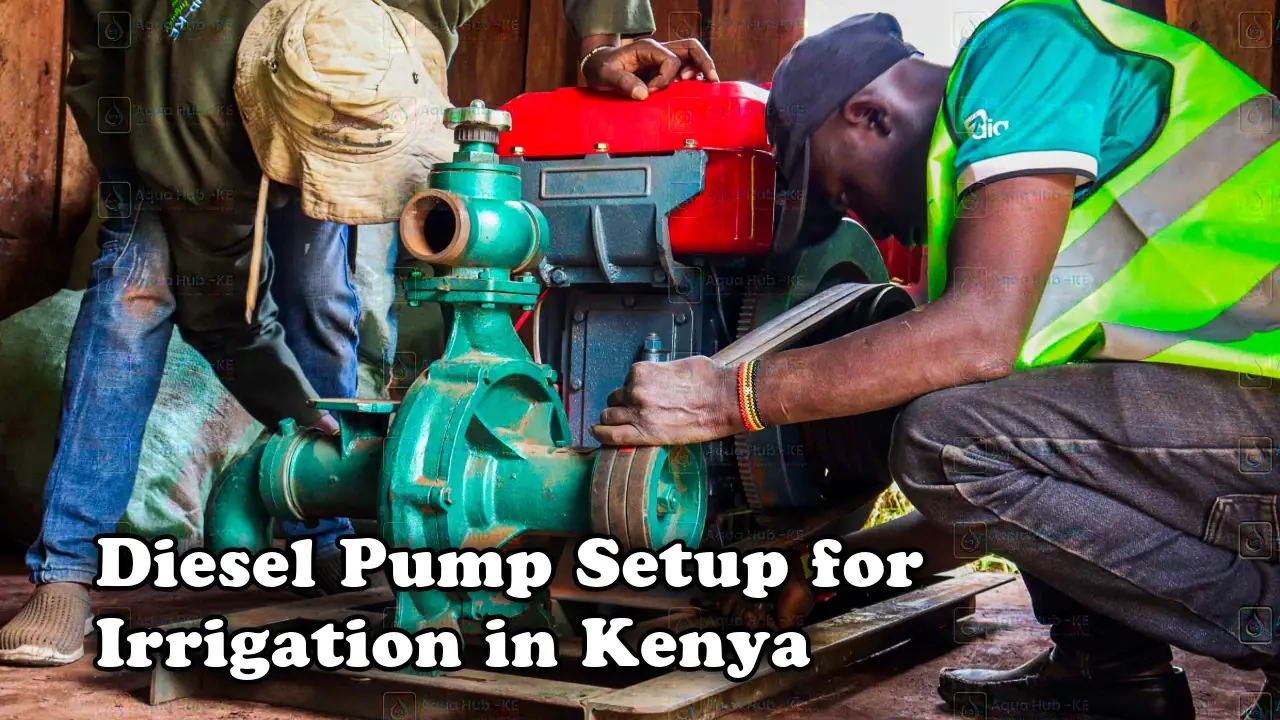
Diesel pump setup with Aqua Hub Kenya begins with a pump set from KES 75,000, and the sizes in our range go up to KES 95,000.
A diesel pump moves water from a dam or river to your field, but it only performs well when it is set up correctly. Air leaks and a poor base can cut the flow and shorten the life of the engine. For this reason, a careful diesel pump setup matters as much as the pump itself.
Aqua Hub Kenya supplies diesel pump sets and sets them up on your farm. Tell us the distance and height between your water and your field by emailing info@aquahubkenya.co.ke or calling +254790719020, and our team will recommend a set.
What does a diesel pump set cost at Aqua Hub Kenya?
The price depends on the pipe size and the engine power. The table below lists each size with the figures that matter for your setup:
| Pipe size | Engine power | Suction depth | Head | Price |
|---|---|---|---|---|
| 1.5 inch Aico | 7 HP | 7 m | 80 m | KES 80,000 |
| 2 inch Pacwell | 10 HP | 7 m | 65 m | KES 78,000 |
| 3 inch | 10 to 14 HP | 6 to 7 m | 70 to 100 m | KES 75,000 to KES 95,000 |
Your final quote depends on the model and on whether you want our team to set up the pump. For an exact price, call +254790719020 or email info@aquahubkenya.co.ke.
What a diesel pump setup from Aqua Hub Kenya includes
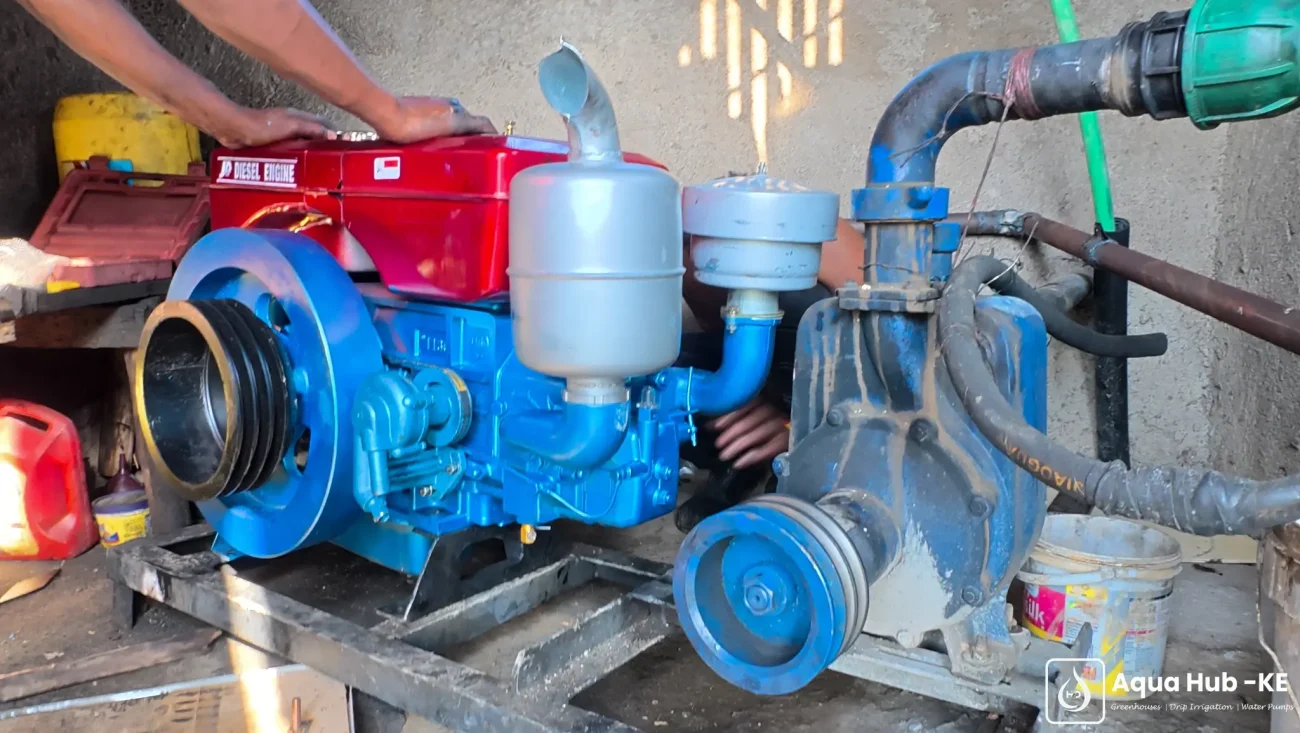
A pump set is more than an engine and a pump. A full diesel pump setup includes these parts:
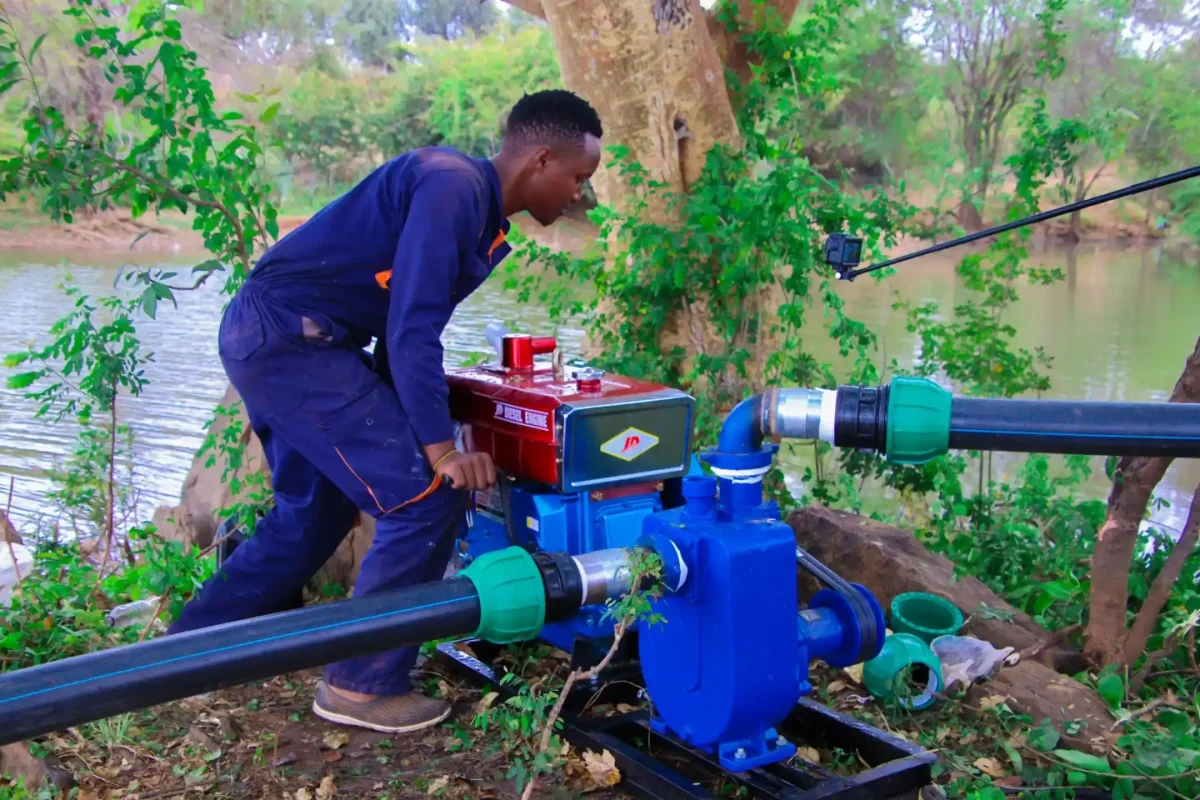
- The engine and pump on a firm base
- A suction pipe with a foot valve and a strainer at the water end
- A delivery pipe that leads to your tank or field line
- A non-return valve to stop water flowing back
- A control valve to adjust the flow
- A fuel supply and a safe place to store it
Each part has a job, and a weakness in one of them affects the whole system. Our team checks every part before the set is handed over.
Planning a diesel pump setup with Aqua Hub Kenya
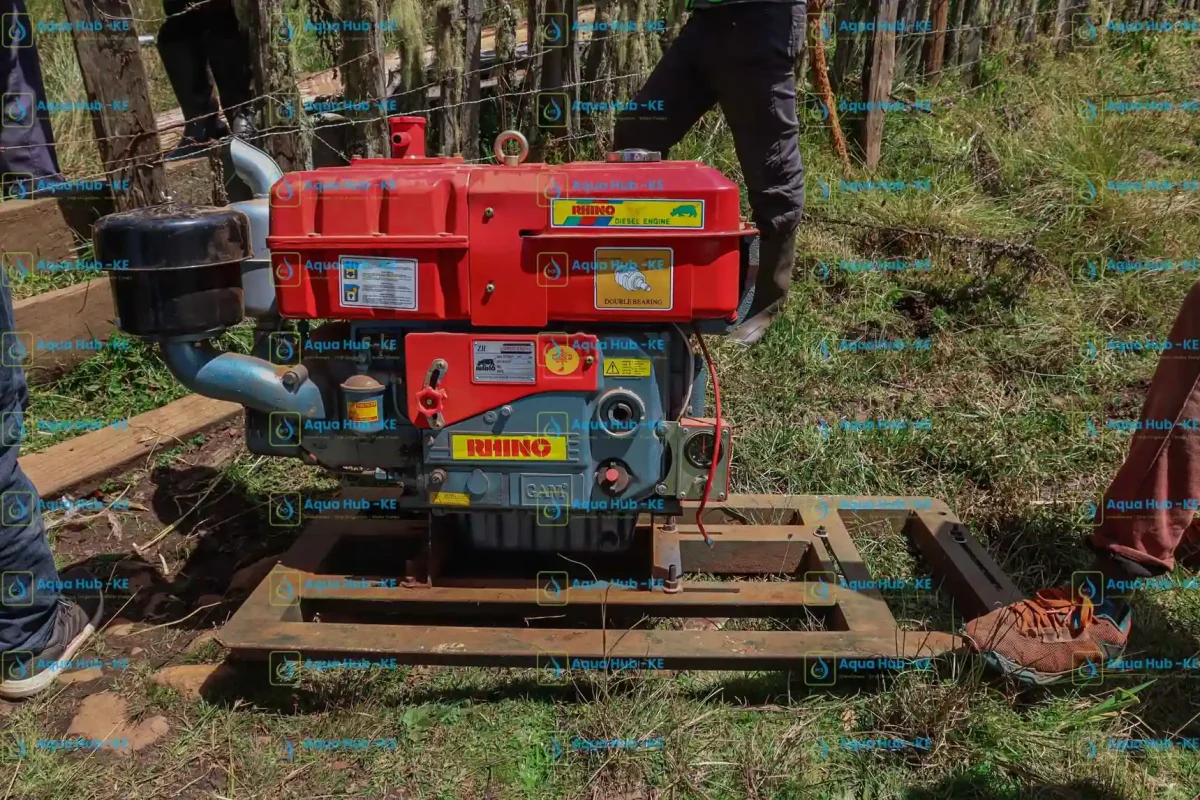
Good planning starts before any tool is picked up. We look at the water source and the field, and then we study the route the water will take. The plan decides where the pump stands and which pipe size to use.
Measuring the head and the distance
Head is the height to which the pump must push water, and it includes the climb from the pump to the highest point of delivery. Pipes also use up some of the head through friction, so we choose a pump whose head comfortably exceeds your requirement. Longer distances need more allowance.
Choosing the pipe size
A larger pipe moves more water, which helps when you irrigate a wide area. A smaller pipe suits smaller plots and lower demand. Our range runs from 1.5 inch to 3 inch sets, and we match the size to the area you irrigate.
Positioning the pump and building the base with Aqua Hub Kenya
The position of the pump affects how well it draws water and how long it lasts. Place it on firm, level ground as close to the water as is safe. A pump that stands far above the water has to draw harder, and it may fail to draw at all.
A solid base holds the engine steady and reduces vibration. A concrete block or a firm platform works well. The engine needs space around it for airflow, since it produces heat and exhaust. Cover from rain also protects the engine and the fuel supply.
Setting up the suction side of a diesel pump with Aqua Hub Kenya
The suction side is the most sensitive part of the setup. Any air that enters here stops the pump from drawing water. Our diesel sets list suction depths of 6 m to 7 m, which means the pump must stand within that height above the water.
Suction pipe and foot valve
The suction pipe must be sealed at every joint, because even a small leak lets air in. A foot valve at the water end keeps the pipe full when the pump stops, which helps it start again. Keep the pipe as short as the site allows.
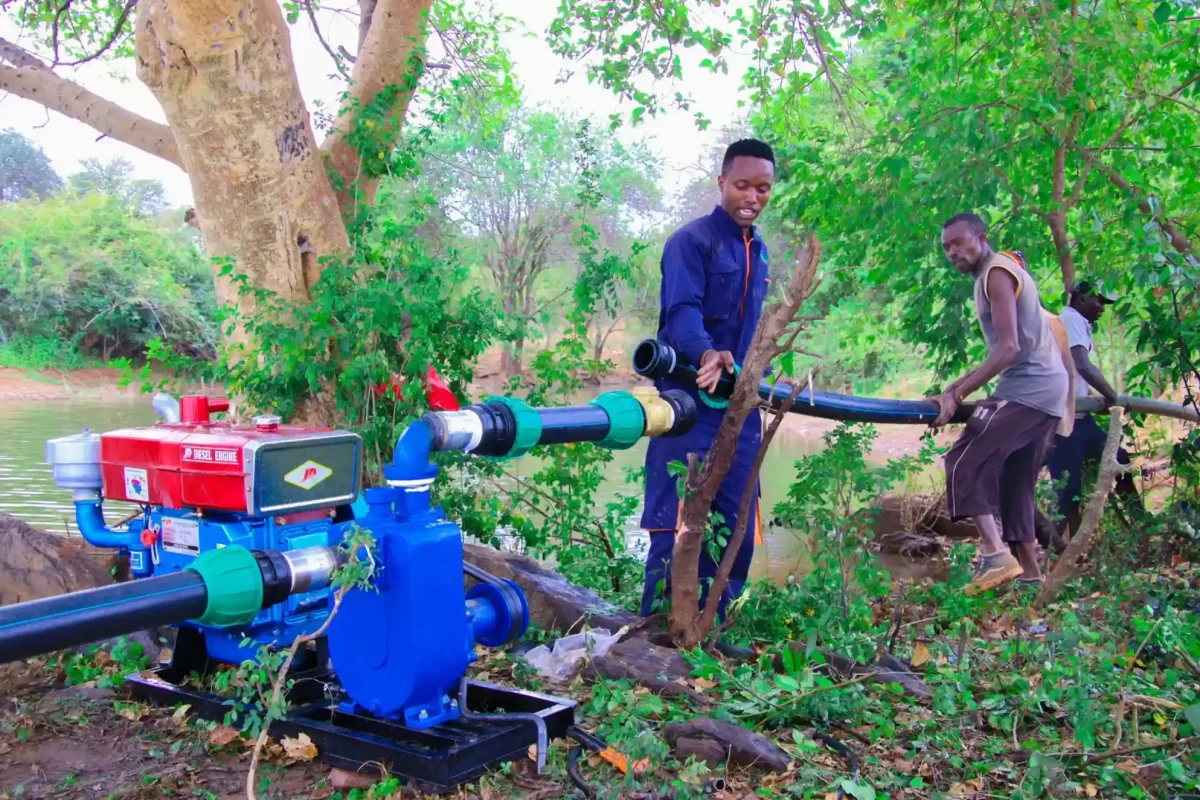
Strainer and water quality
A strainer fitted over the foot valve keeps weeds and silt out of the pipe. Dam and river water often carries such material. Clean the strainer regularly, since a blocked strainer reduces flow in the same way as a leak.
Setting up the delivery side with Aqua Hub Kenya
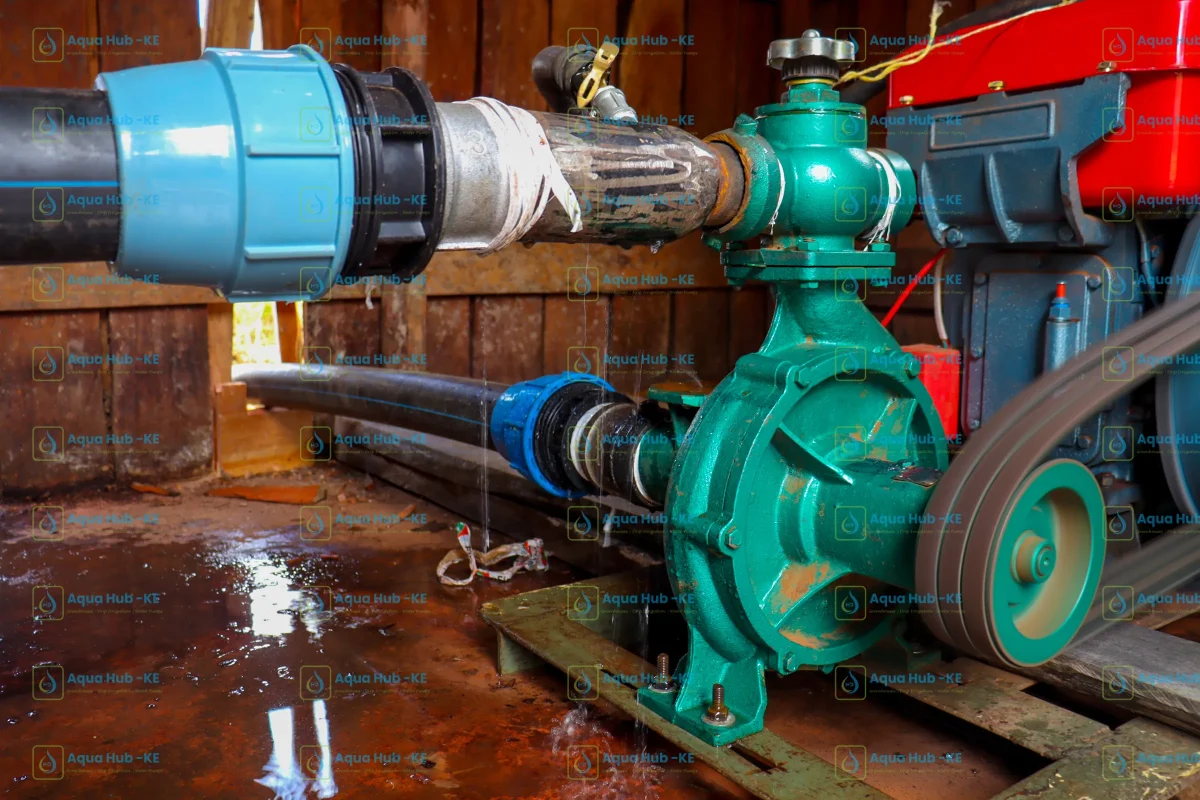
The delivery pipe carries water from the pump to your tank or field. It should match the size recommended for the pump, because a pipe that is too narrow raises the load on the engine. A non-return valve prevents water from flowing back into the pump when it stops.
A control valve lets you adjust the flow. This is useful when you need to reduce the pressure or direct water to different sections of the field. Where the delivery line is long, a larger pipe lowers friction and keeps the pressure steady at the outlet.
Step-by-step diesel pump setup by Aqua Hub Kenya
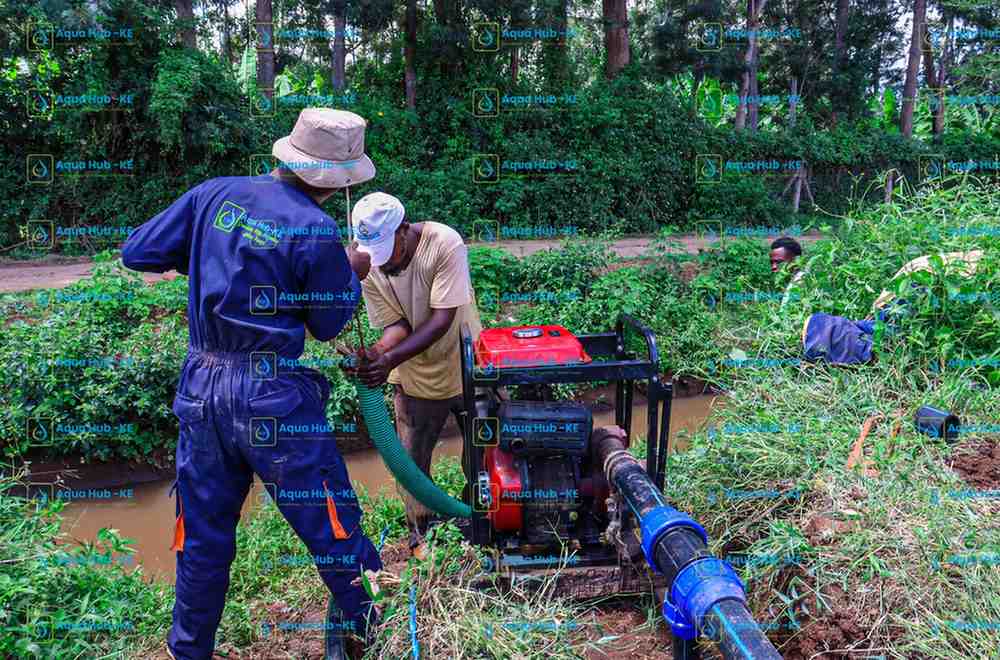
Once the plan is agreed, the work follows a set order. Our technicians set up the pump in these stages:
- To lay the groundwork, firm, level ground near the water is chosen for the pump
- The base is built or set before the pump goes on it
- After the pump is fixed in place, the suction pipe is fitted with a foot valve and a strainer
- Further along, the delivery pipe is joined with a non-return valve and a control valve
- When every joint is tight, the pump casing is filled with water to prime it
- With fuel in the tank, the engine is started and the flow is checked
- In the closing stage, each joint is inspected and the team explains the controls
To book a diesel pump setup, call +254790719020 or email info@aquahubkenya.co.ke with your location and farm details.
Priming and the first start with Aqua Hub Kenya
A centrifugal pump must hold water in its casing before it starts. If it runs with air inside, it cannot draw water, and the pump may overheat. Priming fills the casing and the suction pipe with water and removes trapped air.
Before the first start, check the fuel level and the engine oil. After starting, listen for unusual noise and watch the flow. If water does not appear within a short time, stop the engine and check for air leaks, since running dry can damage the pump. Note the flow at handover, as it gives you a reference for later checks.
How Aqua Hub Kenya fixes a pump that does not deliver water
A setup that does not perform usually shows clear signs. Common signs of a problem include:
- The engine runs, but no water comes out
- The flow is weak or stops after a short time
- The pump makes a loud, uneven noise
- Water leaks at a joint or valve
Most of these come from air in the suction pipe, a blocked strainer or a pump standing too far above the water. Switch off the engine and check these points first. If the problem continues, call +254790719020 so that a technician can advise you.
Staying safe around a diesel pump
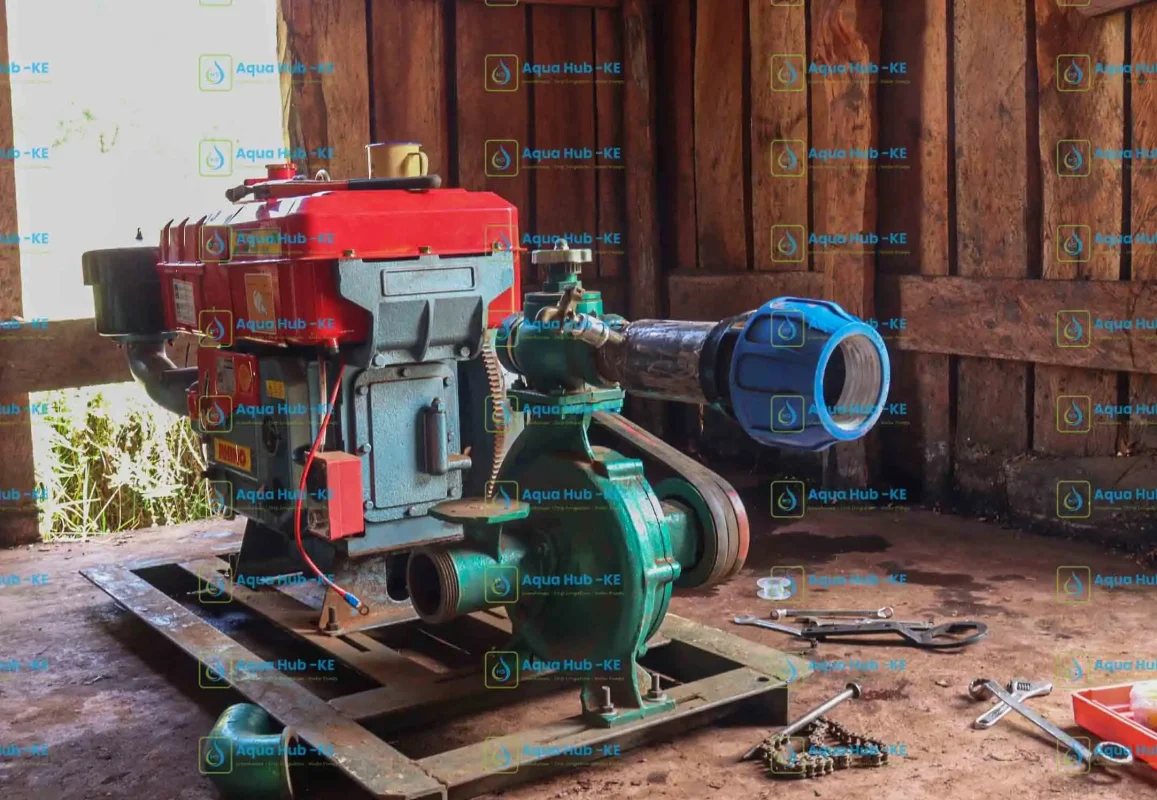
A diesel engine runs hot and carries fuel, so basic safety matters. Keep fuel in a covered container away from the engine, and fill the tank only when the engine is off and cool. Make sure the engine has good ventilation, because exhaust gases are harmful in a closed space.
Keep children and animals away from the pump when it is running, since the engine has moving and hot parts. Fence the area if necessary. These simple habits protect people and equipment alike.
Why choose Aqua Hub Kenya for a diesel pump setup?
A pump set is a long-term purchase, so the quality of the equipment matters. Aqua Hub Kenya is a trusted supplier of diesel pump sets, including Aico and Pacwell models, and we state the specifications of each size openly. This lets you check that a set suits your site before you buy.
We also take care over the setup itself, because a good pump performs poorly when it is installed badly. Describe your water source and your field by calling +254790719020, and our team will recommend a set and plan the setup.
Frequently Asked Questions
How much does a diesel pump setup cost in Kenya?
A diesel pump set for a setup in Kenya costs between KES 75,000 and KES 95,000 in our range. Call +254790719020 or email info@aquahubkenya.co.ke for the exact price of your setup.
What is a diesel pump setup?
A diesel pump setup is the complete arrangement of a diesel pump, its base and its pipework. It moves water from a source to where it is needed.
How close should the pump stand to the water?
The pump should stand as close to the water as is safe, within the suction depth of the model. Our sets list suction depths of 6 m to 7 m.
Why must a diesel pump be primed?
A diesel pump must be primed because it cannot draw water when its casing holds air. Priming fills the casing with water before the first start.
Do I need a foot valve?
A pump that draws from below needs a foot valve to keep water in the suction pipe. This helps it start again after each stop.
Why does my pump run but give no water?
A pump that runs without delivering water usually has an air leak in the suction pipe or a blocked strainer. It may also stand too far above the water.
Can a diesel pump run dry?
A diesel pump should never run dry, because the water in the casing helps cool it. Running without water can damage the pump.
Which pipe size should I choose?
Choose the pipe size according to the area you irrigate and the amount of water you need. A larger pipe moves more water.
How should I store diesel on the farm?
Store diesel in a covered container away from the engine and from direct sun. Keep it out of reach of children.
Final Thoughts on diesel pump setup by Aqua Hub Kenya
A good setup lets the pump deliver the flow it was built for. Placing the pump close to the water, sealing the suction side and priming correctly all add to its working life. With simple checks, the pump keeps supplying water through the dry months.
A diesel pump setup with Aqua Hub Kenya begins with a pump set from KES 75,000. Call +254790719020 or email info@aquahubkenya.co.ke to get the exact price for your farm.