


Blog
Solar Irrigation Pumps in Kenya

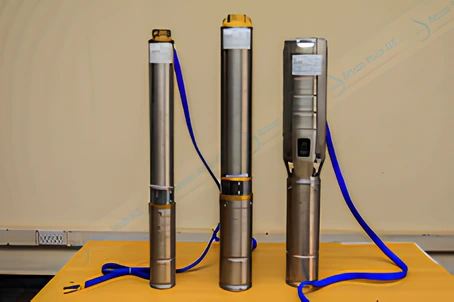
Irrigation is becoming a sustainable way to improve production and quality in agriculture in Kenya. Solar water Pumps for irrigation ranges from KES 15,000 to KES 150,000 in Kenya. Aqua Hub is accredited to distribute a wide range of high-performance solar irrigation pumps in Kenya. Our solar pumps include surface pumps and submersible solar with panels, inverter and controllers.
Call 0711138312
Cost of Solar Irrigation Pumps in Kenya
| Type | Motor Power Rating (Watts) | Outlet | Head | Capacity | Cost (KES) |
| Solar Submersible Pump | 300W | 1″ | 40m | 3,000 L/H | KES 15,000 |
| Solar Submersible Pump | 400W | 1″ | 60m | 3,000 L/H | KES 20,000 |
| Solar Submersible Pump | 750W | 1.25″ | 69m | 5,000 L/H | KES 36,000 |
| Solar Submersible Pump | 1100W | 1.25″ | 110m | 5,000 L/H | KES 40,000 |
| Solar Submersible Pump | 1500W | 1.25″ | 138m | 5,000 L/H | KES 50,000 |
| Solar Surface Pump | 1100W | 2″ | 14m | 50,000 L/H | KES 56,000 |
| Solar Booster Pump | 180W | 1″ | 60 m | 1500 L/H | KES 11,000 |
| Solar Booster Pump | 370W | 1″ | 35m | 2200 L/H | KES 14,500 |
Cost of Solar Irrigation Pumps with System Components
For a pumping system with solar panels, pumps and accessories, cost may range from KES 180,000 to KES 1,000,000.
Call 0711138312
Why Farmers Should Buy Solar Irrigation Pumps
For decades, farmers have relied on diesel and petrol pumps to supply water for irrigation. While they move reliable flow rates, they have high operating costs compared to solar pumps which run on free solar power.
Solar irrigation pumps are the most efficient alternative for irrigating your farm, thanks to Aqua Hub’s top-performance pumps.
Due to the unpredictable rainfall and high cost of fuel, using solar irrigation water pumps is a smart
Solar Irrigation Pumps: Requirement for Operation
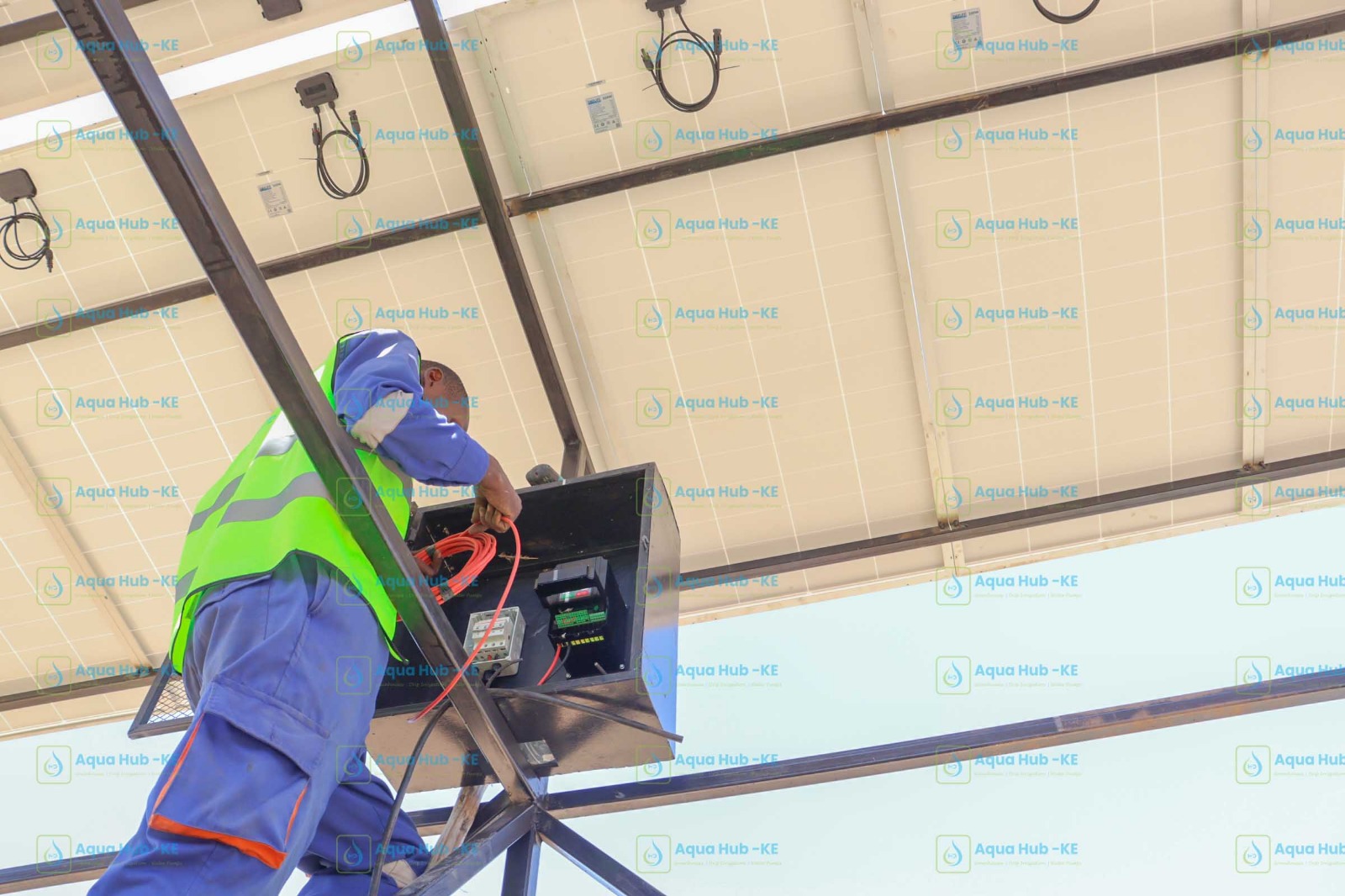
Installation of solar panels and controllers
- Solar panels – PV modules or solar panels capture the solar energy that powers the pump.
- Delivery Pipes – distributes water from the source to the farm.
- MPPT Controller – monitor the output of the solar panels. Also protects the pump from voltage surge, overloads and low water level dry runs.
- Inverter (optional) – only required if you are using AC pumps. Convert solar power to alternating current.
Types of Solar Irrigation Pumps: Understanding your Options
Surface Solar Irrigation Pump
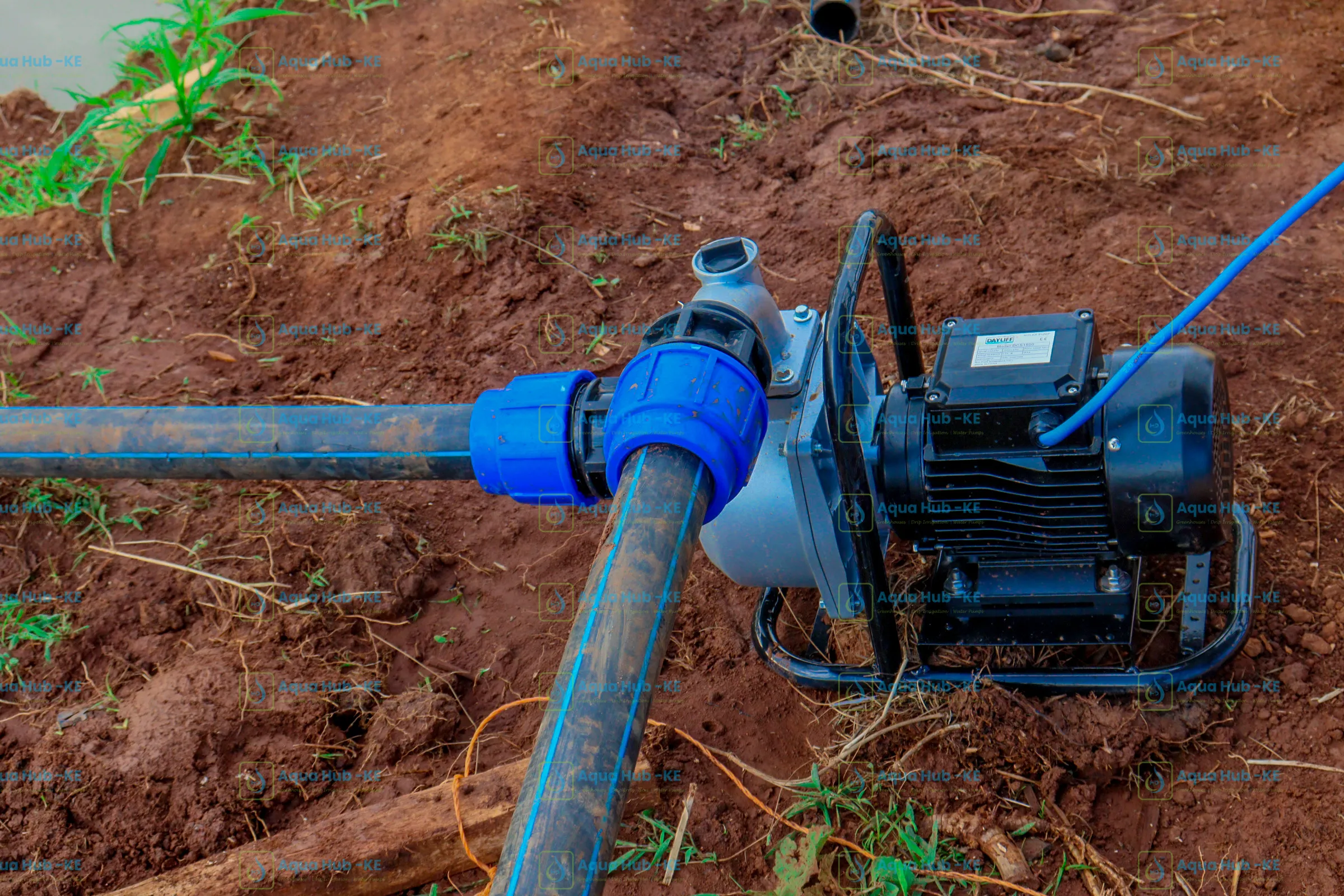
Surface Solar pump for irrigation
You will need a surface pump if you are going to use water from a nearby river, dam, or tank. A solar irrigation pump also works in shallow wells below 8 m.
Solar Booster Pump
For high-pressure irrigation systems such as sprinklers and rain guns, a solar booster pump would work best.
Submersible Solar pump
When sourcing water from a borehole, a submersible pump would be used. In most cases a submersible solar pump is cost-effective for irrigation and domestic water supply.
Solar Pumps for Irrigation: Power Options
Direct Current (DC) Pumps
Most solar irrigation water pumps in Kenya operate on direct current. They are connected directly to solar panels and eliminate the need to use an inverter.
Alternating Current Solar pumps
Works on AC power and thus requires a solar inverter to convert the DC power from panels into AC. While the cost of AC solar irrigation pumps is high, they are more ideal for high-pressure rain gun sprinklers.
What Factors Are Key When Buying Solar Irrigation Pumps?
The flow rate of the solar pump to buy must meet the water requirements for your farm.
- Total Dynamic Head (TDH)—vertical lift distance plus head losses due to friction in pipes.
- Depth of the water source—an important factor for deciding which pump type and the specific suction height.
- Pressure requirements: the deeper the source of water, the higher the power rating of the pump to use. It affects the solar panel capacity and number.
- Farm size – a large farm would significantly mean you need a high specification pump for efficient irrigation.
Solar Pumps Return on Investment
It would take at least 12 to 18 months for you to break even on the cost spent on investment of solar pumping system.
Technical Guide: How to Size Your Pump and Panels
Before buying a solar irrigation water pump, you must calculate the daily water needs. Different crops have varying water needs and irrigation frequencies.
To correctly size a pump, calculate the total dynamic head and match it to the required flow rate on the pump curve.
Total dynamic head (TDH) is calculated by sum of:
Suction height + additional lift + friction losses.
Match the solar panel power capacity to the pump’s motor.
Benefits of Using Solar Pumps for Irrigation in Kenya
- Low Operation Cost: Solar pumps reduce costs incurred in irrigation as they run on free solar power.
- Reliable irrigation: solar pumps deliver a consistent water supply to sustain crop production.
- Green energy: does not pollute the environment. Solar pumps do not emit carbon.
- Low maintenance needs: designed with fewer moving parts, thus minimal maintenance.
- Sustainability: solar pumps use renewable energy, thus minimal interruption.
Solar Pump Installation
The installation process, including pump, panels and pipe connection, will determine the performance. You should engage professional pump dealers and installation companies such as Aqua Hub Kenya for proper setup.
The steps for solar pump installation are explained:
1. Mounting solar panels
Mount solar panels 2 or 3 m high on a roof or metal stands with a south-facing position for maximum solar capture. Panel connection is done in series or parallel connection.
2. Install the Controller
Mount the MPPT charge controllers on a protected structure near the panel (ensure the cable run is not more than 10m to minimise power loss).
Connect panels to PV input, then battery if included. This regulates voltage spikes, preventing pump burnout.
3. Position the Pump
For submersible pumps, lower into the borehole on 1.5-2″ PVC/column pipes, 1-2m below static water level. Attach the pump cable to the drop pipe with clamps every 3m. Surface pumps go near the source with a foot valve and a 7m max suction hose.
Prime surface models by filling suction line fully
4. Connect Wiring and Pipes
Run the pump cable to the controller’s load output; use 4-6 mm² cable sized for distance. Connect the discharge pipe to the tank or drip lines with a check valve to prevent backflow. Ground system to avoid shocks.
Test electrical continuity with a multimeter before powering.
5. Test and Commission
After all wiring is complete, test if the pump is working as expected. For a surface solar pump, you may need to prime it if not self-priming and switch it on.
Monitor the flow rate to ensure it matches the specifications. Check for leaks, unusual noise, or low pressure.
We have done several pump installation projects in Kenya, and our focus is to ensure you get reliable irrigation.
Challenges of Solar Pump Systems
High initial cost of investment – the cost of solar pump and accessories is high. It is expensive to buy but cheap to use.
Theft or vandalism – ensure the panels or pump is installed in a secure place.
Low sunlight periods – integrate with backup lithium batteries.
Frequently Asked Questions
1. How much does a solar pump cost in Kenya?
KES 15,000 and KES 150,000 depending on the type and model.
2. Can a solar pump work at night?
Standard solar pumps only work during the day. If you are going to use the pump at night, you need backup batteries.
3. What is the difference between a solar pump and a diesel pump?
Solar pumps use free energy from the sun but have higher upfront costs. Diesel pumps are cheaper to buy but have high operational costs.
4. How long do solar panels for irrigation last?
High-quality monocrystalline panels can last 20 to 25 years with proper care.
5. Can I use a solar pump for drip irrigation?
Solar pumps are ideal for drip systems. They pump water to a raised tank to provide consistent gravity-fed pressure.
6. Do solar pumps work when it is cloudy?
Yes, but the flow rate will be lower.
7. Which is the best solar water pump in Kenya?
It depends on the water requirements, application and power options. Solar pumps by Aqua Hub Kenya are the best.
8. How deep can a solar submersible pump reach?
Up to 350 meters.
9. What is the lifespan of a solar water pump?
Over 20 years.
10. Where can I buy solar pumps in Kenya?
Aqua Hub Kenya